Podcast
50 AI Agents run this SaaS company (Top 3 Explained)

Liam Dunne
Host
May 15, 202543:03
This SAS founder has built over 50 AI agents and automations that quietly grow his startup. One of which consistently books three to five meetings every single time a top creator posts on LinkedIn. We're officially in this era now where scaling isn't just about hiring the right people. It's about multiplying the output of those people through automation and AI, which Max and his team have taken to the extreme. So, hope you enjoy this episode. All right, cool. Let's talk some automation and agents. So, obviously been watching your content uh for a while on LinkedIn and YouTube, and I think I've even bought a couple of your um automation courses. Seems to be something that you lean on heavily uh at Triggery. Just for for those watching that maybe haven't dipped their toes in the water too much with regards to automation and agents, like why are you leaning into it heavily at Trigger Fine? Um, two reasons. The the first reason is is so, uh, the whole vision that I had for Triggery when I first started Triggery was to keep it as lean as possible. Um, I didn't want to go and create, you know, like a two 300 person company. That wasn't kind of the the idea. Um and it then kind of like if you don't want to do that then it forces you into um creating you know complex automations or complex agents to essentially help you um not replace people but more empower the current team that you have to be you know two three four five potentially more versions of themselves. Um which ultimately then allows you to keep the team super lean super mean as a as a result. That's the first reason. The second reason was it's just become a bit of an obsession. I like uh I just love it, right? I And I know we'll go into this, but sometimes, man, I get distracted and I build an agent and I'm like, "This is cool, but it won't have any business impact. I've just been distracted uh for the last half an hour building something that just looks really fun." Um and so yeah I it's been a little bit addictive creating these things as well just to prove that I can kind of do it to myself. Um but mainly it was the it was the first point right which is create efficiency. Yeah. Yeah. I can relate with the second point. You know there's been a few times where I've been deep into N flow and I'm like hold on you know I've sunk a few hours into this. I don't know if this is like it feels fun but I don't know if this is a good use of time. I experienced the same when using cursor or lovable vo when building things. I've, you know, I've, this might be an extreme example, you know, I've never been a gambler, but I feel like when using cursor or vo or lovable, every time I send it a request, I don't know, there's some like dopamine there. We're like, oh, what's it going to build? Is it is it going to get it right? Oh, no, it hasn't get it right.
Okay, I'll go for another spin. And next thing you know, you spent all day. There is. There is. is the amount of times my wife is trying to get me to finish and I'm just like oh I just try let me like I can't leave it like there's this one part with uh you know curs I'm trying to fix and like I don't want to stop until I fix this little part. Yeah. Yeah. No, I resonate with that and Yeah. And then Yeah. Yeah. I've had to pull myself away a few times which kind of sounds a bit crazy like but I imagine it's similar feeling to like gambling or something. Um there's a lot of tools appearing at the moment like it's just been crazy. a lot of workflow automation tools. Are there any certain tools you lean more towards? I just use NA10 solely um for all of my automation uh stuff. Um you know, you can do I've got two versions of NA10. I have the cloud version which is their kind of their hosted uh version and I self-hosted as well. And depending on the workflow, I'll use the either our self-hosted or or their version depending on how heavy the the automation essentially is. Um, but yeah, I'm I've been a big NA10 fan for a very very long time. They've only really kind of gone boom like this year, I think, with the the agent kind of introduction, but I was using them long before like they became big. And they're they're just great. like they're really thinking about everything that you need and they're probably a little bit more technical than Zapier and Make and others which is what like appeases to me as well. Yeah. Yeah. I don't know um and has this as a feature or if you have visibility visibility into this but is there any way you can sort of quantify how much time these automations these workflows have saved? I don't know if it reports that to you in the number of runs or the number of hours like what are we looking at there? So, it it's uh they've only just introduced it uh funny enough. I was literally just looking at it uh before we hopped into this call.
So, it's a new feature now. You can add uh per workflow. You can add like an assumption of the amount of hours saved if this thing runs. And so, then every time it runs, it will clock that up. I've not added that to I literally just seen it. So, god knows how much time that I've saved with with mine. And I think, you know, I was saying to you before the call, I think I have about 50 different agents and that's not even automations running alone. So, it must be it must be insane. Yeah. Yeah. Yeah. Oh, yeah. Hundreds of hours maybe just Yeah. Yeah. Cool. All right. Well, um keen to see the the automations workflows that that you think are having the biggest impact like uh to to run through them. Yeah, for sure. There's like there's a lot of agents, right? But I think um one of the ones that has the biggest impact is like my like low usage uh agent. Let me share my screen here. And this uh this is the correct one. Yeah, there we go. this low usage agent um high level effectively it's going to be looking up any customers that haven't logged in in um the last you know whether it's it's got different kind of criterias inside of here but it's like the last 7 days the last 30 days uh so on and so on depending on the criteria then creates like the severity of that like uh like risk of churn and then kind of runs a play out of that but let's break it down. But before I go into it, like what has this done for me? Um so out of all of my kind of if we were to put a segment of low users, um it has converted the low user segment 60% back into being more frequent users as well.
So it's like a huge percentage um where you would have historically needed a CS individual to go into this to like work out what needs to be done to then try and like re-engage and re kind of create um ideas with the uh individuals. Yeah, that's insane. Yeah. Yeah. I use atio as the CRM. So basically what it's doing is uh it's querying atio to see when they last logged in. The reason it can do that is I have a data pipeline set up to ATIO which basically means all of my users information is coming from Postto which is our product analytics tool and that's syncing to Atio so I can see when they last logged in and just a question on that sorry um I I I I started using ATIO this week actually for my startup do when those users are pushed to Atio from post talk are you putting them in like um the deal pipeline or are you just adding them as as contacts? At the moment I'm just I'm adding them as contacts and then once they um uh depending on the stage i.e if there is still a trial or not. That's when they go into like a particular list whether then they're in a list view as opposed to a person view. Um they actually get added not by postto gives the information it gets added from our postgress. So I have segment postgress and superbase essentially is hooked up to segment segments hooked up to atio that creates the person when they first sign in to uh trigger fi then post hog then starts to update all the product usage side of things uh inside of there.
They go in as a person initially and then depending on the stage of the individual uh it then updates the customer stage which then adds or doesn't add them into a particular list. Um fun fact I'm using a complete free version of Atio. I've just built so many automations using NA10 on top of it that like I'm you know I've got agents inside of Atio where I click a button it sends a web hook to NA10 which runs an agent which then puts produces the information back into the cells. And so the the user stage like the life cycle stage that that that would just be a custom property in ATIO that you're programmatically updating as they move from trial to customer I guess. Correct. Yeah. Yeah, everything's a custom property um that we're basically updating or not depending on what I'm wanting to look at. I even have like triggery syncing to Atio through some form of uh automation where I'm then syncing anyone engaging with my content, my team's content that goes in. And then I can actually start to see like revenue attribution to see if they like to post before signing up because I have the sign up date and then I also have the purchase date. So, I can see the journey that someone's going on uh from the moment that they like to post to the moment that they signed up as well.
That's advanced stuff. I mean, there's I'm pretty sure there are products on the market that would cost a pretty penny just to get that level of visibility. So, that's cool. Yeah, man. And I don't Yeah, this is this is what comes with the obsession with working out like how can you create the efficiency and I think one thing that I'll say before we we continue with like some of these agents is none of this is possible if you don't have um all of the systems that you work with have the ability to pull data in and out through some form of web hook or API and two you you have created some form of like data pipeline which basically means can you transfer information from one side of the business to the other and can centralize that in some place to then start to contextualize it. If you can't, you can build all of the agents in the world, but it's never going to be able to access everything. And it goes back to that kind of age-old argument, which is, you know, it's it's like scattered data everywhere and you can't make sense of it. So before you go down this route, you really want to think about what tools are you using and is everything syncing together in some form of maybe some form of birectional sync between all the systems, all the platforms. That way you can then start to overlay agents over the top of all of this stuff and you know that it's going to be really legit, clean and up to date as well.
Yeah, sure. Yeah, it makes sense. So yeah, so what this is is doing essentially this is finding anyone who hasn't logged in. Then what it's doing is it's going into postg to do a deeper dive and it's basically looking at every single thing that they did inside of posto. So every event that they did, every action they took, every profile that they added in literally down to down to the minute detail where it then sends it through to one of our first three agents. The first agent is going to start to research that user and the company itself. So what that means is it's going to go and understand who are they, what does a company do, who is the ICP of this company, what is their job title, what would their focuses be, why would they maybe even be using something like triggery and that's hooked up to uh the ability for this agent to search the internet to go and kind of complete this kind of deep dive into who they are. It then sends that information through to this usage agent. This usage agent will then look at all of the data that we previously gathered on how they've used Triggery, etc., etc., etc., use the information around who they were to then start to understand, okay, well, you know, what is the best use case on how to use triggery and that's hooked up to a knowledge base that we have. So this is like a customtrained model that knows everything about triggery. Every call that I've ever done is fed through to this model where then it's learning and it's it continues to learn every sales call that I do. It knows everything about triggery that I do. Um and therefore it can help like prompt this uh kind of use case usage agent here.
And so what this is doing then, this is saying, "Okay, well, hey, uh, Liam, uh, given who you are, given what your company does, I can see what you've done so far, but this is how I would perhaps use us, and here is a step-by-step breakdown on how to go about doing that." So, it provides a very actionable case study with what like spoon feeding them on what they need to do to start to like get their, you know, show back on the road, so to speak, with using Tripify. Um that then compiles it gets broken down into uh an email agent. Um where it then basically sends it through uh we use a marketing system called loops. Yeah. Um and it basically pings that and then it updates atio to say hey I've sent this person an email. It's a really important step because if you don't do that if they don't log in the next day it's going to then basically hit them again with another email. So, we update ATA. We update Artia with the email as well. Um, because if they then still don't log in in the next 10 days, it will then do a follow-up thread and it will have the context of the previous email that it's done so it doesn't duplicate and it builds on it basically.
Wow. Okay. So, with the follow-up thread, is that a separate uh workflow in uh L or is that all encapsulated in here? All translated in here. It's just how I prompt it basically. So as it's coming through from Atio, I can I query the data so I know if a field has basically been inputed. If that field has been inputed, then I basically tell the agent, hey, this person has already received this email. Um, so it knows and then it basically builds on top of that. If there's no email to build on top of, it doesn't worry about it at all. Sure. Cool. Um, can we zoom in on some of these agents? like I'm because for example you you you just talked about it sort of so briefly but I think it's one of the most important parts is like the fact you have this system that is taking all your sales calls and is using that to like train the agent over time like even just something as simple as that like how is that how is that set up? Yeah, let me um let me Okay, let me share this. This is like the mind map of my business.
Uh but the let me break this down for you in a little bit more granularity of how it's working. So the way I view view it way I view it and the way everyone views it right is you have outbound and inbound naturally. Now I won't go over the outbound motions but what happens is like once a call is taken this call is taken through we use fireflies as our system. Deliberately chose fireflies cuz they got a really good API. Um the call recording gets basically transferred through to a vector database that we've set up essentially. Um a vector database is a place where you can store um large quantities of like text uh text data essentially and then you can do a thing what's called a rag retrieval on that information. So basically as you input the text you can tag it and then basically the AI can then sift through all of that text to find relevant information about what's being asked of it. Um and what happens is every call gets fed through to this and then it basically updates its like what we call it knowledge base and it will also self clean it. So like as time goes on it will get rid of stuff so it doesn't get too large. Now it is probably the most complex agent that I have because of what it's what it's doing. It's quite technical but also the most important because an agent for example if we go back to here uh an agent without context if I didn't have this it's going to really struggle to know all right you go use this tool you go use this tool you go use this tool like you got to prompt it then in that case and the bigger a prompt the more likely that a uh that agent is to go rogue so you have to like feed it context and an agent without context uh will never be um yeah will never basically be be that good. And that's like the the key to it because then once you have that, you know, that knowledge hub, that knowledge base, you then can start to do so many things. You know, we've got an agent for creating content um based on what people are talking about and what they're saying that then gets fed through to my team. We've got an agent that creates newsletters based on again all of this. And you know, it becomes like a wheel, doesn't it? the more calls you take, the more content that it creates, the more context that it gets, the better everything becomes.
And so the case is the the situation is like, hey, just get the engine going. And then it's kind of like um the analogy is like it's a hybrid car. So it's like as you drive it charges the batteries um right and that's like the the the concept behind this whole philosophy that we that we're kind of embedded in in triggery. Just a couple of questions here. So, the first one be super basic because I've tried doing this, but I use read.ai and I quickly realized that it's not optimal for this. Um, and maybe this is a problem you've solved, but let's say you're jumping on dozens of calls a week or a month, but they're not all sales calls. Some of them are like internal, some of them are just coffee chats with random people. How are you um training the model to differentiate between those conversations? because maybe there are some conversations that you do want to train the model on and some that you don't. Is is that just like such a simple simple problem to solve or relatively? So all transcripts get fed through to the same the same flow. The transcript then gets read by an agent which then basically makes the decision on whether it's worth storing or not. I have told the agent what is worth storing. Right? So it's like um in in my context and I have multiple different agents by the way uh sorry multiple different vector databases. I have one specifically on product and usage of the product and customer stories. So the agent will look for that to see if any of those topics have been mentioned and then route that to that particular vector database. Um I have another one for content. Here's a little bit different. That one doesn't really take um uh take call transcripts, but that one looks it takes a web hook from trigger social listening and then if it's like an interesting post, it will store it in there to get context on how people are writing, uh the types of content that they're talking about, uh so on and so on. Yeah. Um so yeah, I basically just have like an AI filter that with a a relatively um you know simple prompt in terms of what is uh important to me or not and that basically is the gatekeeper to whether that then passes through uh the workflow and gets stored into the vector database or not. Yeah. Yeah. Crazy stuff. Um the this the second question is what percentage of your content is like AI assisted you know where maybe the first draft has been written by AI like are we talking all of your content is is um being generated by this or or a smaller percentage. Um so I I I never have anything write uh everything for me. If I show this one. So this is like this one is actually my YouTube agent and I got the this is like the same principle for like uh um LinkedIn as well and and Twitter as well. Actually I got a different Twitter one but it's the same principle. And so what it's basically doing is it's either taking data from social listening searches or it's um I give it like a category that I want to talk about. Um, so it can it can either have it run as an automation or it's like a single flow and event effectively it's going and searching YouTube and it gets like 30 40 videos um and it gets the transcripts of these videos and it also watches these videos and does um text uh sorry speech to text uh as well um to understand what they're saying how they're saying it the styles and things like that and then basically it does a basic summary because the issue with YouTube versus LinkedIn is like a transcript is sometimes massive.
If the video is an hour long, it's huge. And so you can't bung all of this data all through to one agent because it gets overloaded even with context windows getting bigger and bigger. So each video gets individually summarized where then all of those summarizations come through gets merged and then goes to one agent. So we have two agents, one summarizing the individual video before it then feeds through to the actual um uh agent up here where you'll see there's another knowledge base. This is the other vector database that I was talking about. So this knows everything about my content, how I write the strategy, the hooks, and other individuals that I deem interesting and and kind of good. um before it then basically sends through to this uh Google Sheets here which is um the way that it works is it gives me the funnel top, middle, bottom. It gives me like the title, it gives me the overview, then it gives me the key topics to discuss. Um and it this is the same for LinkedIn and I do the same for YouTube. And it more acts as like an ideation for me. It gives me okay like this is like the focus points. This is what it wants me to talk about. It has access to all of this. So it can also see what I have started posting about what I've done. So it can continue building off uh things to create like a narrative, a flow um you know so on uh to do that. So I never have it write things for me, but I more have it surface the ideas because that's what I struggle with the most is is like, you know, is like deci the decision fatigue, I guess, around um, you know, knowing what to talk about um, and the topics to hit. Putting that together in a post is fairly easy for me anyway. But you could have it write everything if you wanted.
Yeah. Yeah. This is complex stuff. Um, so a couple of questions and apologize I'm taking you around in circles here. Um, but the first one is because I I actually you had a course I think like an N automation course and one of I think you had the content agent in there and I found that some YouTube video transcripts weren't available. Am I incorrect there? I was using um the API marketplace and and some were were just not available. Is that true or have you found a work around that? Uh so so it is true and so the workound that I basically have been built into mine is you you have like I use whisper basically um and it's a um speech to text. So basically I I'll get the transcript myself through an agent basically listening to the actual video um and then it annotates it and summarizes it down so I can grab it no matter uh no matter what. Interesting. and more of like a strategy question because you touched on it about you struggle with the ideation. Yeah. A lot of your content is related to AI agents and automation. How how did you know that was the right um right area for you for you to post content about? Um, I didn't actually.
Like when I first started posting, I didn't I it was literally as simple as like I wanted to build some cool and I thought I would post it and it was just really popular. Um, there's no there was no logic. I was like, if I find this interesting and valuable when I'm doing it and like back in the day, I literally would do a video every day and a workflow every day and I would build that on the day and then post it on the day. Like there was there was no like good planning. Um, but I knew that like if I found it interesting then surely other people would. And I think that's what people seem to forget with social media is like you post for posting sake and it's like well are you is this valuable for you? because if it's not valuable for you, it's sure going to be valuable for anyone else. Um, so that that was like the the the the logic. What I did realize is that I I was going too technical. Um, and I realized I needed to the the videos that did better were like the ones that were a little bit more high level. And so along the journey, you know, I realized the way to create this into, you know, a lead generating machine, i.e. your content strategy generates loads of leads is give enough that you're like, "Wow, this is pretty cool. I really I I can see it. I love the idea." Um, but not enough that they could go and do it themselves. Um, the reason that you you want to do that is they'll come to you like they keep seeing your stuff, they'll eventually come to you. And that's kind of what you want, right? You don't really just want to do content for just vanity sake. It's like, you know, I wanted to create an uh um a way of generating interest. Um and that was the play and it and it kind of has worked Yeah. really well um as a as a result.
So by chance and then it's just like happened and it's like kind of built and capitalized on it from there. Yeah. Something I learned is one, people love playbooks, workflows. Um, like very tactical. You know, I have a post on LinkedIn. It's done like 4 million impressions and it was just like here's how to do X. Um, and if you can somehow wrap your product into that workflow or that playbook, you're on to an absolute winner. Um, and I think I've I've almost taken it to the point where how I think about business is I think about could I turn this into like a viral piece of content? Like could I create some kind of playbook uh or workflow? Would would people resonate with that? Okay, now what product do I need to build to fit within that workflow? Like I think that's that's that's not a bad place to start because I've just some of the most popular content on LinkedIn is basically just teaching people how to do an edge. It's it's action. And also, by the way, that's what LinkedIn are promoting. They want educational content. They, you know, they they don't want the crappy, you know, gated, you know, marketing jargon that used to hit LinkedIn. They they want people to be learning and people engage with it better and people spend longer in it better and that's why they promote it as well. So, yeah, man. I I I completely agree like that's the philosophy that we even take with our with our road map is understand like LinkedIn is a great way of just getting feedback on what what works and what doesn't like what does the market want like if thousands thousands of people are engaging with something that you've posted and like no one engages the other time then that's going to tell you something. Now, the only I'd love to caveat, you need to post it maybe two or three times cuz you could just hit a crappy day. But it's giving you feedback on what people are interested in. Um, and you can see why AI agent content like tools right now are doing well. Not like these AI SDR tools. I'm more talking about like the way to to build your own agents because I post an AI agent video on LinkedIn, it just goes boom. like it it's like the thing right now that people love and it's I think that's what people a lot of people don't think with LinkedIn it's like a great way of just like testing product market fit but almost like messaging fit and like conceptual fit um and then you build on it for sure. Yeah, I've I've I've l got a post going out live today where it's, you know, I've seen it happen more so on, it happens on LinkedIn, see it happen on Twitter more often recently where just some first-time founder will post a simple screen recording of uh a prototype they built in a couple of days and it goes viral and then they know, oh right, people want this. It's validated. I'm now going to go away and build the product and raise money if I need to.
And it's like that distribution first mindset of like, is this something people want? Can it fit into their workflow? going to make them more money. Okay, let's validate the message and then you know then they'll tell you what the the features you need to build to to get to that state. Yeah. Yeah. Exactly. And then and then you build in public and like the whole thing. And then by the way like we we we love joking about it with our team but it's like content makes content. So, it's like, you know, it's like I'm creating content uh building the agents and then I'll often like film myself building the agents and it's like you can keep going like with this like there's multiple narratives that you can create and then that's why it's why I find it funny sometimes when people struggle to think about what to to do and what to say. It's like just start filming and then like you you literally sometimes can film yourself filming and that becomes like a new narrative, a new style of video and that's building in public versus this is more educational content. Do you know what I mean? Um Yeah. Yeah. Yeah. Uh, and that's what we try and that's what we try and strive for. Like everything is like how can we generate an angle on this and create a content strategy out of this. Yeah. Nice. Cool. Um, have you got some time to dive back into the agents? I'm interested to see how you build the agents themselves because the devil's in the detail, right? Like for example, I'm pretty sure you have to give a prompt to those angel uh to those agents and and how how are you approaching that? Do you go in the meta approach where you're getting the LLM to create the prompt to use with the LLM or yeah, how are you bridging that? Um, so yeah, let me pull uh let me pull up one here. These things um there's one that I'm going to try and get up here which is like create like a H. Here we go.
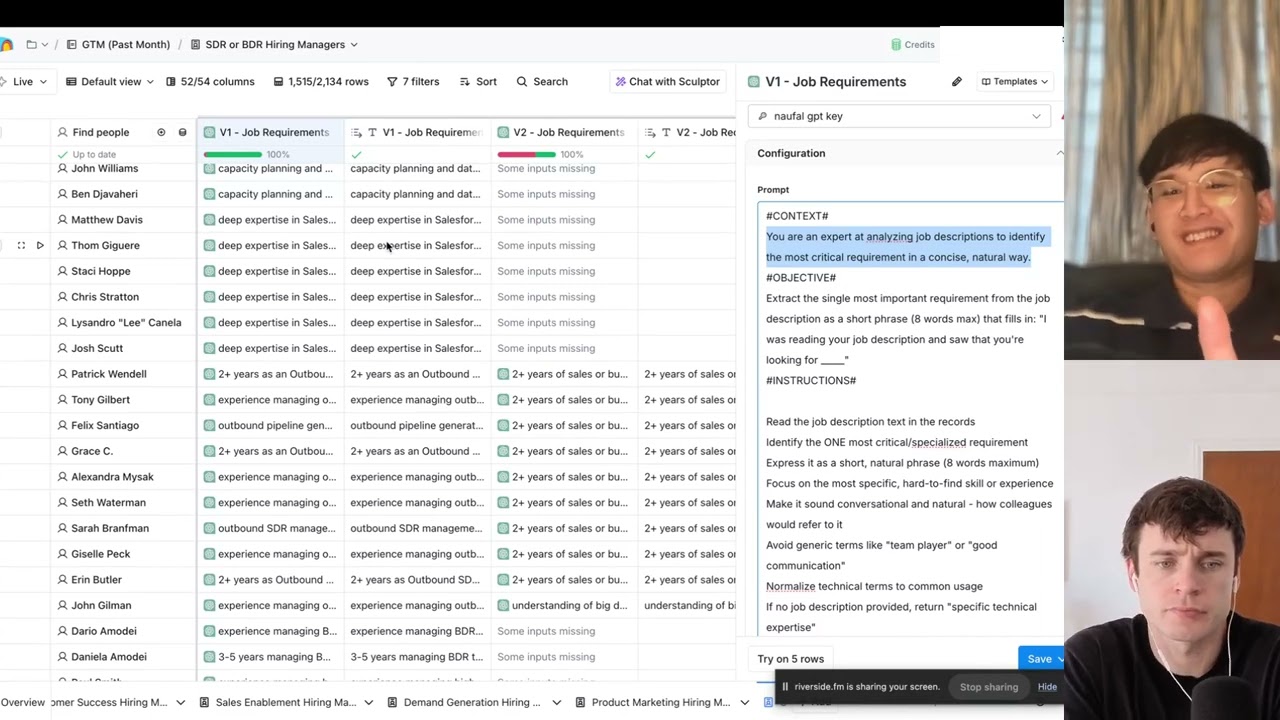
Lead magnets. This this one's a fun one. This is a good one. Uh screen. Here we go. So, I'll give a whistle stop tour and then we'll we'll have a look at some of the actual prompts. Um, what's going on here is I I can give this a subject area or by the way uh you can you can actually feed this and I did there's a video on me on YouTube showing at a at a clay event where like I built a clay table to automate creating lead magnets on scale to then use inside of you know LinkedIn outreach or or cold email outreach. But this particular one I give it a prompt. So it doesn't start from like a web hook. But you could say hey like go and let's let's let's build like a lead magnet on XY Z right. And what's happening here is I've effectively built my own version of like deep research um that now you're seeing some of these tools do like I think OpenAI has one but you got to be on a certain plan blah blah blah. This is deep research kind of broken down into components. So let's go through each each of the prompts. What happens in here is you give it like a uh subject. So it could be like um you know how intent data can be used uh for sales I don't know something like that. And what happens then is this agent will essentially go in this first this first agent will essentially build a query. So it will break down that topic area into multiple topics um in like subtopics right. So for example, if it's like how how can intent data help sales or marketing teams it then would be like what is an intent data um how they would less of leveraging intent data um etc etc etc right so it's like breaking down categories um I initially come up with the prompt and I then test it if it's not getting the desired output that's when I then go across to like claude or something to help tweak the prompt I tell it what is the issue like where it's going wrong and then it will tweak the prompt in align in alignment with the areas that aren't going right or the areas that aren't uh or the areas are going well for example.
So what happens is it comes through it gets one subject and breaks it into four. Those four subjects um you can see here uh then are basically sent through to this research leader and this research leader as you can see from this prompt will analyze the provided topic uh thoroughly to determine the research approach if the topic this is uh uh it's related to triggery um but it's basically going to understand okay like how do we research it what are the core components so it will run an initial light research on this and then it will further be like okay this is the prompt that we then need to use. So, it's going to self-prompt another agent later down the line to then run further in-depth research. So, we'll break it back down for you. Uh the main topic here was how can intent data be used for marketing or sales. It then created four categories. One of those categories, for example, would have been um how to leverage uh uh ways in which you can action intent data. And so, here it's then going to go and research that. And then it's going to work out, oh, okay, there's different tools that you could use. Um, there's different messaging styles that you can use. So, it's then going to be like, okay, I need to think about that. And then going to create a prompt for that for this agent later down the line to then run on that research. Got it. Yeah.
So, you're like chaining them all together rather than just one shot in it. Correct. Yeah. So that then gets fed through to this project planner and this project planner then writes the title, the subtitle um the chapter details uh for it as well. So it's like a quite a big prompt. So you can see here all the stuff coming through um as well. So this like basically starts to structure the actual uh chapters. So you can see here this is a good one. This is the actual output of one of them. The title that it came up with was the shift of signal-based prospecting. And the prompt is in this chapter explain the fundamental shift from traditional prospecting methods to signal-based prospecting. Start by highlighting the limitations of how conventional approaches low conversion rates under 5% blah blah blah blah blah. So this is the prompt and you can see chapter two building your foundation and trigger fight. This was a triggery lead magnet I created here. Uh in this chapter we need to do XY Z. And so what that happens is that then sends us through to this team of uh research assistants and they then basically run um the they run the whole research. And here this was the trickiest part here. I have to go back and forth with some LLMs to help me create this prompt. But what I'm what I'm doing is is I'm telling it like hey you're currently writing this chapter. The previous chapter was this.
The next chapter is this. So it has context. So it doesn't like repeat itself. It doesn't overlap. It knows where it's going. It knows where it's come from. And then it can really start to shape this paper uh to together essentially. Yeah, it's that was a that was a tough one. And then anyway, what happens then it it goes uh gets all of that data, all the research. It goes through to this editor. This editor basically just um uh compiles it, you know, polishes it like it's an expert, you know, carefully read the entire content piece, grammar, ensure the tone and style, blah blah blah. This is literally just your editor that puts it all together in a pretty bow before it adds it to a Google doc. Sorry, just just there because I think this is the way you've structured this is maybe similar to how like a mature team would be where say there's like a content agency that has a bunch of employees. You'd have someone who's maybe responsible for researching then you might have someone who's responsible for writing the piece and then you have like the editor who's you know the person who has to give the final approval. I quite like that approach you've taken there where like each a each agent has its individual role rather than hey you're the content person you need to do it all. I think that's quite an interesting point. Yeah, I think it it always works better. Um basically uh when you can break down the individual tasks of an agent into multiple agents and then chain them together.
Um, not a lot of people know like the bigger the prompt, the more areas of it hallucinating starts to happen regardless of how big the context window starts to become. Um, the well, it's not necessarily that. It's like the more instructions that you give it, uh, the more it can maybe miss an instruction. And therefore, if like one agent has one instruction, it's going to be better. and chaining them together is going to give you a better desired output. Plus, it also means um I can start to use I mean I think I actually use anthropic throughout this one, but you can also then start to use different models for different things. Um and you know each model has its own strength and and disadvantage uh at certain uh parts and and whatnot. uh and so you you you also then by chaining you then have the ability to give a different model uh at a different time. So yeah, this one's like using the thinking this one's using normal 37. Um so they're all anthropic here, but they're actually using different models inside of anthropic there as well. Cool.
And what's the um the output from this? Is it like I guess how are you using these lead magnets? Is it for cold outreach? Is it for say uh social content? Yeah, so bit of both. Um the original desire of this and and the way that I originally used it and guess it crashed it is I so I use trigger fire, right? And we're we're we're monitoring anyone with the outbound that we were doing. We were monitoring anyone engaging with uh thought leaders. And so an example would be like anyone engaging with Adam Robinson who talks a lot about you know website identification and intent data and so forth. It would then pick those ICP individuals up from within trigger 5 and it would then trigger this particular workflow. Um sorry it wouldn't trigger it yet. It would then reach out to that person. So reach out to to to yourself for example and say hey can see that you're really interested in 10 data. I've actually compiled a bit of like a one pager on how you could leverage intent data specifically at XY Z. Um I I I've spent the last day on it. Do you want me to put it together? Do you want me to send it over to you? Uh and then I say like PS go give Adam a follow. He's he's worth uh checking out. So they reply because they're like no way I already follow Adam. Like I already know that.
Um, but they also uh reply because they're like, "Yeah, I the subjects of of interest to them and they also reply because they're interested in seeing um, you know, that paper that you've created because the lead magnet is tailored for the subject area, but then specifically for their company and it then triggers this workflow through a web hook, which then starts to run the research. What then happens is um once this is is completed, it chucks it into a Google doc. It updates that Google doc uh so that it can be shared. It gets the shared link from Google Drive and then basically sends the share link back to uh a separate automation that I have which then will then send them the uh shared. So we we we if you're using you know depends on the tools that you're using for outreach whether it's email whether it's LinkedIn you can get the responses if the responses are yes it then basically triggers that to be like okay here's the URL and then automatically sends them back so it's all completely hands off and all completely uh automated but looks like highly like customized there ain't anyone on this world that would think that that would be like uh automated is the desire. Um, so and then from there, you know, you manage to get you start to book in a call. They're obviously interested in what you can do and blah blah blah. So the rest is history. And it was just like a way of like how can I create value at scale without having to do this one by one basically. And that was like the desired concept of of where it became. Now the one that we're looking at now, you see it's entered via chat. Um, that's because I use this one for uh like lead magnets on LinkedIn. So, it generates like a paper and then I'll do the the age-old classic on LinkedIn where you scroll up and down fast and take a video and it's like, "Hey, like I pulled together like a document on how you can do XY Z and uh Yeah, man. I mean, one of them did like uh did insane. We had like a thousand comments on it, people wanting to see it and and it came all through this, which is funny." Yeah.
Yeah. I mean, people hate it. People hate it, but it works. I think that's that's what I've noticed about anything AI generated is you've got usually you've got two groups of people. You've got the the skeptics um you know moaning and complaining about it and then you've got the people who are leveraging it and I don't know they they seem to be the people that are doing better off. So Well, yeah, exactly. You've got to you got to ride the wave. It's it's it's certainly not going anywhere. So cool, man. All right. Well, we're at time there, so I don't want to um take more of it, but is there anything any final thoughts you you wanted to to go through or should we wrap it? No, I think uh I think that's pretty good. Um like I said, the the main things is none of this is possible if you can't transfer data from one side of the business to the other. So, it's like before you go and build or start building anything fun, it's think about the infrastructure of your like tools and and the data and the way that they already talk to each other. Get your house in order with that first and then overlay all this jazzy fun stuff on
Podcast

Podcast

Podcast
Podcast
Podcast
Podcast