Podcast
The NEW Way of SEO in 2026

Liam Dunne
Host
February 8, 202611:55
Get discovered and win the AI Search race before your competitors do: https://discoveredlabs.com/
Reddit threads finder for AI search: https://discoveredlabs.com/tools/reddit-threads-finder
AEO content evaluator for AI search: https://discoveredlabs.com/tools/aeo-content-evaluator
Headline optimizer for AI and search: https://discoveredlabs.com/tools/heading-optimizer
AI SEO Guide: How We Ranked a B2B SaaS #1 in ChatGPT (2026 case study): https://youtu.be/eSBmFv7jb9Q
SEO Is Not AEO - Here's Why (Differences Explained): https://www.youtube.com/watch?v=YEhddcoUfeI
How To Win AI Search for B2B SaaS (Full Guide 2026) | AEO vs GEO vs SEO: https://www.youtube.com/watch?v=LCtPpQg0pHg
---------------
I break down seo 2026 and explain exactly how search is changing for businesses that want real, sustainable visibility. This is focused on b2b seo and saas seo, where competition is high and traditional tactics no longer work the same way.
I show how ai search optimization is replacing old-school ranking strategies and why answer engine optimization is now critical. I walk through a practical aeo strategy that helps brands win visibility inside AI-powered results instead of fighting declining clicks.
This video covers how to drive organic growth b2b even in a world of zero click search, ai overviews, and conversational search engines. I explain how chatgpt seo and perplexity seo actually work behind the scenes and how to adapt your modern seo strategy to match how AI systems choose answers.
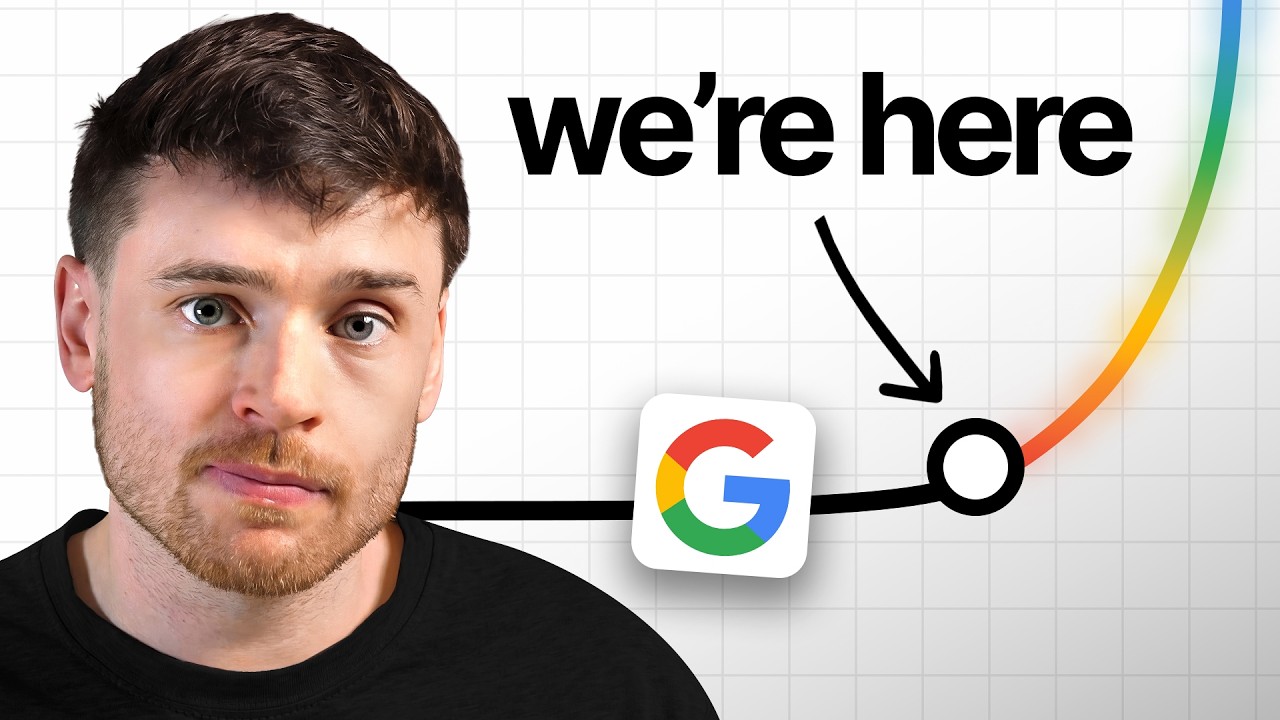
The rules of SEO have changed going into 2026. If you're still playing by the old rules, such as publishing a few blog posts per month, obsessing over keyword rankings, and building links the way you always have, then you might be putting yourself at a disadvantage. And I know this because it is quite literally my job to know what works in organic search right now. We're working with over 10 B2B SAS companies ranging from 7 to 9 figures to help them get discovered. And I've personally witnessed the rules change dramatically just over the last 12 months. The companies that are winning understand SEO isn't just about Google anymore. They've adapted to the new reality where buyers are researching in AI assistance and they're showing up in those conversations. So, in this video, I'm going to be breaking down the new way of SEO in 2026. I'm going to cover what's changed, why the old playbook is failing, and exactly how you can position yourself to win. Okay, so let's start with what most B2B companies are getting wrong about SEO right now. So the reality is this mental model we've all used for the last decade, which is the linear SEO funnel is breaking. So ranking number one on Google has always been the goal, but that no longer correlates as strongly as it once did with business outcomes, especially when your buyers are using AI assistance for research. What we're experiencing is the rise of dark search.
This is the idea that a huge portion of buyer research is now happening in places we can't track. places like ChatGpt, Claude, Perplexity, even private Slack communities and social media. These buyers are getting their answers and they're forming opinions before ever clicking through to your website. And this is just a new reality of zeroclick research. The issue is that most companies are still following the old playbook and they're resistant to change. Yet, they're wondering why they're not getting the results they want. So, surely SEO is dead, right? Wrong. The opportunity in my opinion for organic search is actually bigger than ever. But the playbook has changed. Acquiring organic customers is still an efficient scalable strategy. But now you need to be thinking about both SEO and AO at the same time. Now you have to understand why all of this is happening because unless you understand the mechanics, then you're not going to be able to apply the new strategies effectively. There are three major forces that have converged to create this new era of search. First, generative systems like Chat GBT have very different information retrieval mechanisms than deterministic systems like Google. Google gives you a list of blue links, which is like handing you a pile of library books that you need to read. Whereas these AI assistants, they're giving you a summarized answer.
It's essentially reading those books for you and just pulling out all the relevant valuable snippets for your situation. And these AI answers are usually personalized. These models consider the context of your conversation. They look at the broader history of all of your conversations and they remember your specific situation. So if these AI assistants are doing the research for the user and they're deciding which snippets of information are most relevant, well then there's really less reason for buyers to be going around clicking through links and therefore it matters less if your page is ranking high on Google because your content may not be relevant to the user's prompt regardless of its rank. And so this completely changes what we have to optimize for as marketers. Second, also because of AI, these AI writing tools have flooded the market. And so the cost of producing a passable piece of content has dropped to zero. And so the implication here is it's created a tsunami of AI slop. Generic lowquality content that's flooded the internet. It's made things noisier and honestly, it's made it harder for everyone to stand out. And third, buyer behavior is once again changing. So the research out there varies, but some studies are showing that over half of B2B buyers are now using AI for their vendor research. So they're doing that initial discovery and comparison in what we call these walled gardens and they're only visiting your website for their final validation or conversion event. So if I had to summarize this entire shift in one sentence, it would be this. You must evolve from an organic search strategy built only for humans browsing Google to one that is also built for generative systems and zeroclick research. Now I am not saying that you should abandon SEO or that it's dead.
Traditional SEO is still very important for Google and I don't see Google going anywhere at least in the short term. But you do need to layer in AEO if you want to have a deliberate strategy that captures buyers who are researching in these AI assistants. All right. So how do we actually do this? I'm going to walk you through three core pillars of a modern SEO and AEO strategy that you can copy. First, if fewer clicks are happening, then we can't solely rely on them as a metric. We need better measurement. These old KPIs of keyword rankings and clicks have become lagging indicators. They're going to tell you what has happened, but not what influence you're having in these new surface areas that are earlier in the buyer's journey. The new leading indicators that you should consider are citation rate, mention rate, and share of voice. most importantly for the prompts that you care about. So think about the prompts where buyers might be evaluating you against alternatives or searching terms with commercial intent within your category. These are the conversations that you're going to want to own rather than justformational prompts. These metrics tell you whether you're even in these conversations when a buyer asks an AI for help. If your citation rate or your mention rate are zero, then it really doesn't matter how many keywords you have in the top three or top 10. you're just going to be invisible to the fastest growing high intent market segment. By the way, I highly recommend you implement self-reported attribution by adding a how did you hear about us field to your demo forms or during post conversion.
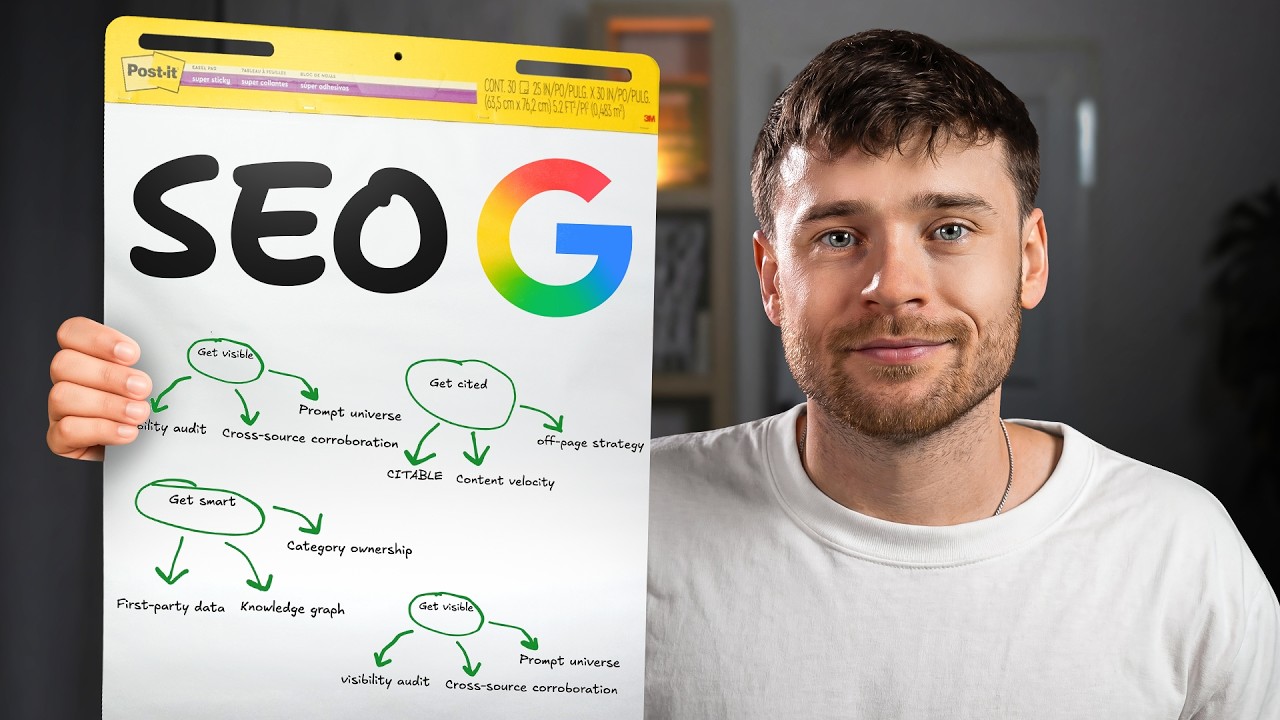
Traditional click and view-based attribution is becoming increasingly untrustworthy. Just think about it for a second. If a buyer researches you in chat GPT, they get a recommendation and then they type your URL directly into their browser, then your analytics is going to show that as direct traffic. Or more likely, if they later search for you on Google and then click through to your website, then you're going to have no idea the AI played a role in that influence. The only way to close this gap is to ask these people directly. It's very simple, but we found it to be the most valuable data points you can collect right now. And if you'd rather just have something that works outside the box, then I'd highly recommend using a tool like Scrunch, which is going to allow you to systematically track your AI visibility. It's going to let you monitor your citation rate, your mention rate, and your share of voice for those prompts that you care about, and you'll also be able to benchmark that against your competitors. Okay. Second, you need to structure your content so that LLMs can easily find, trust, and site it. And so for this, we developed a framework that we call Citable. Now, I'm not going to bore you with all seven parts of Citable right now. I do have other videos on that. But the core idea is that you want to make your content clearly structured. You want it to be optimized to cover varying levels of intent. You're using third party validation to support claims. You're grounding your answers to make LM's jobs easier. Your block structuring for RAG.
Your content is latest and consistent. And it's entity aware. For example, if we're formatting for RAG, this means using TLDDR boxes at the top of your content that give these LLM a quick summary. You want to use bullet points and short self-contained paragraphs which are going to be easy for machines to pass. And just generally think of your content not as some big heavy novel, but as a series of informationrich index cards that these AIs can easily pull from. These retrieval systems work by selecting passages, which are essentially walls of text. And so you want to make sure that your key facts are easy to extract. Otherwise, they're just going to skip you. It also means leading with a clear definition of a concept in the first 100 words. So what is this content about? Who is it for? And when do you use it? This is going to help these machines understand the content immediately. They don't really care much for your long drawn out intros and storytelling. And no, optimizing for LLMs is not gaming the system as some might say, right? SEOs have been structuring content for featured snippets and adding schema markup for years, right? Nobody called that manipulation. This is just understanding how information retrieval works and then optimizing for it, which is ultimately the job of a marketer, right? SEO as a discipline was created by marketers in response to technical constraints by Google. Okay? So, structuring your content for LM retrieval does not negatively impact the human reader experience. In fact, you could make an argument that it makes it better because it makes your content more scannable, clearer, and more direct. And so, you can and ideally should do both. And by the way, if you do want a full deep dive on the citable framework, all seven parts with examples, then I did make a separate video that breaks it all down step by step. So, I'll link it in the description. Go check out that after this video if you want to go deeper into the citable framework. Okay, moving on.
Third, and this one is critical, you need to start shifting your thinking from keywords to prompts and intent. Traditional SEO was about ranking for keywords. You'd find keywords like best CRM software. You'd then create a page that targets that primary keyword and you would try to rank it in the SER. But with AI search, the game is a little different. Okay, the AI isn't just matching keywords. It's trying to understand the users's intent behind their query and then it's figuring out which entities such as companies, products or concepts that are relevant to that specific situation and are going to satisfy the intent behind their query. And so the question you need to be asking is do these generative systems understand your company as an entity and do they understand in what situations your company is relevant? Because this is going to allow them to recommend you. And so this means that you need comprehensive entity coverage, right? Your content and your broader website needs to clearly define your integrations, your competitors, your use cases, your features, your differentiators, and your target personas. You're essentially building a knowledge graph for these AI systems that are going to help it understand in what situations they can recommend you to users. And information consistency is the non-negotiable here. The facts about your company need to be the same across all of your surface areas. So your website, your LinkedIn page, your crunchbased profile, your trust pilot reviews, everywhere. AI models are like automated procurement teams, right?
They're going to cross reference sources to verify any information. And if that information is inconsistent, then they're going to lose trust because their risk of hallucination is going to be higher. And so then they're likely just to give a generic answer to the user or they might just skip you entirely. So a simple way to start with this is a consistency audit. So just create a simple spreadsheet with all the facts about your company and then just audit that against all of your public facing profiles and you will be surprised at what you find. We're working with companies that are doing tens of millions in revenue and they do not have these things in check. And then finally beyond your own website you need to show up in the places that LLM already trust for groundtruth information. And right now we found across all of our clients that one of the most undervalued platforms for this is Reddit. LLMs are trained on massive amounts of data because it's conversational, it's timely, and it's seen as authentic userenerated content. When a real person in a relevant subreddit is discussing a problem, and your product is mentioned as a solution, then that's going to be a massive trust signal for these AI assistants, and it's third party validation that you can't necessarily manufacture on your own website, which is of course going to be bias. Now, I'm not saying this is about spamming links on Reddit about your company. This is just about increasing your share of voice in those subreddits where your ICP is hanging out and these LLMs are going to be crawling through the query fan out process. Now, the point of this video was to give you a highlevel overview of the new rules of both SEO and AO, what's changed and why it matters, but I didn't have time to get into the actual tactics. So, if you do want a full tutorial where I break down step by step of how you can win in AI search and I cover my citable framework in great detail, then on the screen there'll be a link to watch that video. If you just click that, I'll see you on the next
Podcast
Podcast
Podcast
Podcast
Podcast
Podcast