Podcast
How To Win AI Search for B2B SaaS (Full Guide 2026) | AEO vs GEO vs SEO

Liam Dunne
Host
August 22, 20251:14:50
Okay, so from invisible to chosen, how to get your B2B SAS company recommended in AI answers within a few months. So this video is going to be a step-by-step playbook to capitalize on the new AI search era. So we're going to be discussing how to go from zero or low visibility to becoming the top recommended solution in both AI overviews and popular LLMs such as Claude, Chat, GBT, Gemini, Grock, etc. So let's get into it. So, I'm just going to spend the next few minutes discussing really the background and opportunity here. So, we'll start at the macro, come down to the micro, um, and just really try to hit home, uh, what this opportunity is and why you should be capitalized on it, especially if you're like a startup to growth stage company. And I think the biggest reason why is because there's this rare opportunity to reshuffle search dominance. So you have these incumbents, these big companies that have just dominated page one of Google or Bing or any search engine. And there is finally now an opportunity to beat those companies and ride ride these sort of headwinds um that we're experiencing with AI search. And these these opportunities don't come around very often, right? If you look at things from a B2B spec uh perspective specifically um you know the last pro channel opportunity that B2B had was probably the emergence of uh products like instantly and smartly that uh kind of disrupted cold email and I talk about that in separate videos on my uh on my YouTube that probably happened like three to four years ago now um where they completely disrupted the old way of doing cold email and if you took advantage of that in the early days before everyone was talking about it on LinkedIn or doing YouTube videos like me, then you could have made a lot of money. I'm talking, you know, millions of dollars. And now, if you fast forward to today, everybody's doing it, right?
It's been saturated. If you look past that, then you're probably looking at LinkedIn 2009, 2010. If you got on there early and started posting content, again, million-doll opportunity or billion dollar opportunity, depending on what your business model is. You look before that, we're probably looking at Facebook ads. 2006, 2007. Again, you you kind of had to be insane not to make money on on Facebook back then. Look at Facebook ads today. Very different, very hard game, right? And so the reason why I bring that all that all up is the implication here is if you want to capitalize on this and get disproportionate returns relative to your competitors today, tomorrow, over the next six months is the timeline in which you want to get very very serious about this. Okay. So to bring it down a bit, so demand for solutions isn't going away, right? People still have budget. People are still uh want to spend that budget. uh there's new buyers entering the market uh every month. But the implication here that the the change in demand mechanics is how buyers find or or discover and decide uh about solutions is changing, right? And so that needs to be the change to your strategy. And this is the biggest change that's happened to search for 20 plus years, right? And it's showing no signs of slowing down, right? Adoption of AI models is only becoming more prevalent.
you know, chat GBT I think latest figures already has 500 million weekly active users and even the search engines themselves uh Google, Microsoft, etc. um are using AI uh to provide zeroclick answers. And so if your brand isn't part of this, if you're not if you haven't considered this, if you haven't investigated this, if you're not starting to build a strategy around this, then it's likely that your company is invisible to probably the fastest growing market segment. Okay? And so some numbers to support this. Uh so March 2025 um report showed one in five Google searches included an AI summary. And I'll come to what AI summaries are, what AI searches, etc. 48% of B2B buyers use AI search while evaluating vendors. That's HubSpot 2024. So that report's already a year old and and likely these numbers are larger. There's this huge misconception that um only consumers use chat GBT, Claude, etc. It's it's it's wrong. Um and if you believe that, you know, you're going to be missing out on a huge opportunity.
50% projected drop in traditional search by 2028 as users shift to AI assistance. And then um estimated three to four times higher conversion rates from visitors that come via AI answers. And that's a AHF's um study. They actually reported up to 23 times higher conversion rates from visitors who come from AI. Answers and I'll comment to why that happens. Why is there such a delta between traditional non-branded uh search or visitors versus uh visitors who come from AI search? I'll get into details about that. And I think best of all, and why I wanted to get this video out is because we're still in the first innings of AI search, right? It's still early days, but that does not mean this is a fad. is not going away, right? Just look at just look at the market. Um these AI platforms like OpenAI, Anthropic, they're getting money thrown at them. They're already huge unicorns, some of the fastest growing uh companies in the world. Um they're not going away. And then if if you also look and they're the challengers, right? If you look at the incumbents such as Google, Microsoft, they're also taking huge swings. You know, they're throwing money at people trying to get them on board. Even if you look at Meta, how much uh the compensation packages they've been throwing at people, every all of these companies are betting on this like it's uh a matter of survival, right? So, this is not a fad. This is only going to get um uh bigger.
Most companies have not fully adjusted to AI search yet. So, there's a huge opportunity uh to secure first mover advantage, right? So startups and growth stage companies finally have an opportunity with disproportionate upside to beat large incumb uh incumbents that have dominated the SER for decades. Right? So if you look at some of these incumbents who have been on page one of Google or Bing for decades, right? And they they've built up so much domain authority, they have such a large content surface area that they're just not budging, right? AI search has disrupted that. It doesn't matter if you're on page one of Google. that does not correlate with uh AI search success and I'll I'll share some some proof of that and and um why that's the case right so the key thing here is as a I say early stage like start up to growth stage company maybe you're doing single digit millions tens of millions it's always about taking bets how many bets can we can we take do they have disproportionate upside relative to others right and if you look at the channels the the the sort of marketing mix that people are using today LinkedIn in quite saturated both organic and ads.
Facebook ads very saturated cold outbound everyone's doing it today and so it's you're always looking for that edge how can we um get an edge over our competitors and I truly believe this is one of those ways zero click research will increase as AI summaries and answers become more prevalent quickly eroding traditional search performance right so the implication here is that the customer decision journey is changing right and if that's changing if if how consumers buyers are evaluating and deciding about vendors then so should uh your marketing strategy and like I said so what got you to page one on Google isn't going to get you into um AI answers right so ahs the hero of the day um they recently launched uh sorry released some findings where only 12% of URLs cited in AI answers ranked in Google's top 10 right so regardless if you are on page one of Google does not guant guarantee that you're going to be cited in AI answers. Right? So, the implication here is that a good SEO strategy does not promise or does not correlate with AI search success. And this is really the opportunity for startups or growth stage companies where maybe you haven't been able to win the SEO game, but you can win the AI search game, right? And that's because AI models are using their own uh criteria to determine what information is shown.
uh there might be some overlap between you know the algorithms that uh say Google is using versus uh open AI and anthropic but fundamentally these are different companies with a different set of rules um and I'll come on to uh how that behavior changes okay so in the context of AI search optimization backlinks and keywords matter less clear facts and trusted sources matter more okay so who this is most relevant for so you're a B2B SAS company doing over 1 million in ARR. Maybe you're a founder or in-house marketer who already invests in SEO content and want to capitalize on AI search. Maybe you're looking for a low CAC acquisition channel. I kind of talked about channel dynamics uh a few slides before, right? It's expensive. It's expensive to do marketing and sales nowadays. Um and so I think that's really the the point I'm trying to hammer home here is there's disproportionate upside relative to other channels. Uh you prefer systems over cheap hacks. So really in this like black box period uh which is uh a symptom of being in the first innings of a new channel. People are still trying to figure out what the playbook is. And so there's just a lot of garbage and and cheap what I call cheap information out there, right? And so if you're more interested in having an actual playbook and that's what I'm trying to cover um in this video. Now, why I say this is most relevant for you based on these parameters is if you are doing low or no content today, then this information is still going to be valuable as like an FYI, but just expect it to take longer, right? And I I don't think you should be using AI search as your first primary channel. I think this is best for companies who have strong signs of product market fit and are looking to bring in a secondary channel to a to an already working uh go to market. Okay.
And quick background. So if you know this is the first time you've watched a video of mine, you're wondering who the hell is this guy? Um so myself, I've worked in the SAS industry uh over the last six years. Went from in-house uh growth at SAS company to building my own marketing consultancy and agency and I've worked with dozens of companies and helped some companies go from zero over to 10 million uh in ARR bootstrapped profitable. Also the co-founder of discoveredlabs.com. Uh we help B2B companies get discovered in AI search through end-to-end services uh at Discovered Labs. Uh I co-founded it with Ben. This is my co-founder. He's an engineer uh ex Stanford AI researcher. And so a lot of the strategy we've we've built, including this video, is from first principal understanding of how these models uh work. Uh he's previously focused on fraud detection and autonomous robots. Uh he's a lot smarter than I. Um and you know, we have some success. So uh you can see on my YouTube I've got a paper trail of all the type of things I've done in B2B SAS. So uh I'm not going to go through all of these but you know helped companies grow to tens of millions in ARR. Uh some companies get you know life-changing revenue and exit. Um so worked with a lot of B2B SAS companies. That's kind of the niche I operate in. Um and really what this video is centered around.
Okay. So the core concept I'm trying to convey here of AI search. So the primary goal of AI search is to win selection right it's to become the recommended choice that buyers choose not to rank which is in uh the game of SEO right so the goal of SEO is to rank on page one on Google Bing or other search engines so that buyers see your content and then they click through to your website to conduct further uh research right that's the game of SEO backlinks keywords but through AEO and GEO or also known as AI search optimization you're optimizing to become the recommended vendor not just rank in the SER right so hopefully understand the difference in intent here and that's why the conversion rates are just uh exponentially different right so the former strategy of SEO mostly focuses on impressions and clicks and the latter AI search optimization gets you at the top of the buyer short list right and the the thing to understand here is that people using these AI models they implicitly trust the recommendations by Chat, TubT, Claude, etc. Right? It's highly unlikely that if they uh if the AI model says to a consumer, hey, this company is the best company um based on all this criteria, based on all the context you gave me, it's highly unlikely that the buyer is going to doubt that and go investigate it themselves, right? And so, you want to be the recommended vendor in these scenarios. So imagine the trust levels you see with referrals where somebody you know says, "Yeah, um, yeah, I think you should speak with these guys. I've worked with them. They're really good." So imagine the trust levels we see in those scenarios, but with the scale offered by the fastest growing platforms we've seen in human history, right?
That's the opportunity here. And really, we're only in the first innings. If you've had referrals, they always close at a higher rate. Referrals are great, but they've never been scalable, right? Referrals have never really been predictable. And so I think we we're combining a couple of key behaviors here. So just to give some contrast. So traditional SEO, we're chasing clicks from a ra a ranked link that's on, you know, page one ideally. That's the game. AI answers names and sites your company inside p inside personalized answers. Hey, I think you should choose this company based on all of the context you've given me. Very different levels of intent. Traditional SEO, we're ranking whole pages in AI answers. Uh, these models select short extractable passages from pages of content. Traditional SEO, winning asset is a 2,00 uh, word post. In AI answers, uh, win in a citation is a 40 to 80word answer block with structured information. Traditional SEO, impressions, clicks, positions, that's how you know your agency or your in-house team reports success. Whereas AI answers, mention rate, what percentage of conversations are you being mentioned? citation rate, what percentage um are you being cited and share of voice? Uh what is the frequency in which your company appears relative to competitors? These are really the leading uh um metrics. Of course, ultimately we want you know trials, demos, customers.
So some key definitions because there's a lot of definitions uh being thrown around at the moment. So SEO, this is search engine optimization, right? So this is optimizing for traditional search engines like Google and Bing to rank pages and drive clicks. AEO is answer engine optimization. So this is optimizing content to grab featured snippets or answer boxes, right? So featured snippets is where an AI answers and says, "Yeah, you should use vendor A, vendor B, vendor C." That's a direct mention or also known as a snippet. Answer boxes are more specific to these incumbent search engines where if you go on to Google and you search What is the best cold email platform? And I think I actually show some examples in a few slides. The answer box is what is at the top, the AI summary, right? So also known as the old position zero on Google. Uh GEO is generative engine optimization. So this is optimizing for AI chat bots or assistants. So things like chat GBT, uh Gemini, Grock, Claude, etc. So that your brand is mentioned, but more specifically cited in AI generated answers. So, so there is some nuance between these um each you know for example chat GBT has uh different criteria to Grock and to Claude and all of those have different uh criteria to uh you know Google how Google determines to show you right so there's some overlap but they all have different behaviors it's like you know not all paid ads are the same right you you deploy different tactics on LinkedIn compared to Facebook compared to Google they're all ad platforms but they all have different behaviors considerations.
Now, when I say AI search, what I'm doing is I'm combining AEO and GEO together. And some people say AIO as well. Um, but I'm just going to be referring to it as AI search. So, how these um all fit together? Ultimately, this is all search, right? I I disagree with people who are saying, "Oh, this is just all SEO." Um, I think that's uh a very narrow view. I think yes, this is all search. It's all organic search. But like I said, you know, SEO has traditionally always been search engines like Google and uh Bing, whereas with AI search, different platforms, different algorithms, different considerations. So I think that's too narrow of a view, but they do all work together as part of an organic search strategy. Right? So we have SEO um and this isn't really correlated with any uh sort of percentages. So we have SEO which is more like technical health, crawlability, topical authority. Um still very much a huge piece of search here. Nothing I say in this video should be taken as SEO is bad. Stop doing SEO.
Still very important uh um component of a search strategy. We then have AEO which is answer first formatting and schema to earn mentions. And then we have GEO which is third party validation entity graph to earn citations. If none of those words are making sense, don't worry. I'm going to cover all of it. Right? So, ideally for a good organic search strategy, you're running all three of these um with clear ownership for each layer. Okay? So, let's get on to why a normal search strategy or SEO strategy falls short in the AI search era. So, going to be covering five big challenges that make relying on traditional SEO insufficient. Okay. Okay. So number one, user behavior is shifting towards AI answers and assistance. Right? So in traditional search when uh the user searches some keywords like here cold email platform, these are my keywords. The user is then met with well previously it used to be a bunch of organic blue links. Now you just get hammered by ads. But below those ads you do get some of those organic results in the SER. Right? So this is the SER. Uh with AI search, um what's happening is the AI models themselves are researching all of these pieces of content and these companies and then synthesizing those results from multiple uh links, pieces of content and companies and then summarizing all of that information for the user. Right? So the implication here is that that classic journey from awareness through consideration to decision is being shortcircuited because AI is delivering a lot of that information doing a lot of that upfront effort in one go. Right? So buyers may skip directly to a short list or solution without visiting many websites. Right? So the old way of doing this just to get really really clear is if I was searching for cold email platforms I would probably click through all of these links. I would take notes, you know, I probably have a spreadsheet up, especially if I was um uh you know, doing some vendor evaluation and and had a decent amount of budget, right? I wouldn't just implicitly trust just because this person's, you know, ranked one um they must be the best. I would go through all of these pages. I would visit their website, go to the pricing page, product pages, etc. to get a clear picture. That part of the buyer journey is what's being disrupted here, right?
because we can see a Google AI mode cold email platform. Basically, um the the AI has summarized all of this information for me, right? So, best for agencies and businesses of all sizes. If I'm an agency, my ears are going to perk up, right? Because I don't just want a generic tool. I want the best solution for my company. Key features, again, bringing all of that information up front, whereas previously I would have to research that myself, even pricing information. And then it's doing that for all the companies, right? And then with LLMs, so like chat, GBT, cla etc. the dynamics are very different, right? Because as you can see here, I'm just searching three keywords. Whereas how people interact with these LLMs is very different. It's more conversational, right? So that's what I tried to convey in this example here. So I'm an agency founder with 10 employees. I'm looking for a cold email platform, yada yada yada. Right? You can read this. I'm I'm exposing my tech stack. I'm exposing my company context so that the LLM can give personalized recommendations. That's the biggest sort of behavioral change here, right? And so again, it's giving me the pros, the cons, the pricing, all this stuff that I would have to previously do um myself, right? And so one of the implications here is that if this LLM or if this AI overview is giving me all this information, then there's no reason for me to click on your website, right?
Because it's doing the work for me. And so vendors are losing control. There's two implications here. One, vendors are losing control because if the user or the buyer is not clicking through to your website, well, now they're not in a they're not in, you know, territory that that you control. The second thing is if the uh AI models here are misrepresenting your company, i.e. they're withholding information, they're communicating outdated information, you know, wrong pricing, maybe there's new features you launched that aren't being mentioned here, then you're not, your company isn't being presented in the best light. And as I said earlier, consumers implicitly trust the information provided by these models, right? They're not going to think, "Oh, I wonder if this LLM is not mentioning a specific feature that this vendor has. I wonder if the LLM has up-to-date, uh, you know, pricing information." They're just going to trust it. Okay? And so the thing to be uh conscious of here are these LLMs providing accurate up-to-ate information about your company. And that's where the AI search strategy comes into it. Arming the LLMs with accurate up-to-ate information and also ensuring that you're in this short list.
Right? So there's there's a couple of games going on here. So zero click uh is rising and discovery is offsite. Right? So kind of um beating a dead horse here. So buyers are getting complete answers without clicking to websites. So they can ask an AI multiple questions in a row and get everything they need on one screen. So there really is less reason to click through to your website. Off-site discovery. AI becomes the research hub. For example, a buyer might ask follow-ups. What about vendor A versus vendor B? What's pricing like? Any drawbacks? All answered by AI from the web. So even like things like review platforms, there's no need for me to go review platforms because LM can just pull information from there. YouTube, etc. All of these um all of this surface air on the web is just being condensed into one interface, right? And so the implication here, your prospects might form opinions and short list before ever visiting your site or with minimal site visits, right? So you better hope that the LLMs are representing your company in the best light. And even more so, you know, these LLMs are getting the information from somewhere. You better hope that they're not pulling that information from your competitors, right? because your competitors have an incentive to not put you in the best light. Right? So, this is now we're talking about where the AI search optimization comes in and and the sort of game we're trying to play.
So, your winning SEO strategy could be AI invisible. So, being number one on Google does not guarantee being mentioned by AI. Many companies topping uh the SER so being on like page one of Google are AI invisible. AI trusts third parties. So these models lean on neutral thirdparty sources such as analyst reports, high authority blogs, Wikipedia, user forums, communities more than a vendor's own site, right? So every vendor in the world on their blog is saying, "We're great. Our competitors are bad." Right? AI that's not going to cut it with AI, right? AI cares more about what other people are saying about your company than what you're saying about your company. Right? So the implication here is your site's content might be ignored by AI if the web consensus uh you know what other people are saying about you or your topic isn't strong right so competitors with more external mentions can outperform you even if their content quality is lower right this is just completely different to to the game of uh SEO right and we can see some stats here so perplexity basically um the platforms that Perplexity biases towards uh when it comes to this sort of uh third party evidence. So Plexity specifically is Reddit we can see taking up the line share here some YouTube and then we've got Gartner some of these w gardens right like uh G2 etc. So to win on Pexity, there's going to be more of a bias towards Reddit. Chat GBT different uh bias is more towards Wikipedia. Then we have Reddit and then we have similar platforms. Um but as we can see each AI model has its own uh considerations, right? So this isn't just uh if you dominate Chat GBT, you're going to dominate PEXT. You need to have a multi-prong strategy here that considers uh each platform teams are using yesterday's content patterns. Right? So yesterday's content strategy is heavy long- form blog posts targeting keywords with extensive introductions and storytelling. Example 2,000word articles that bury the answer in pros. Right? So top on this you know compet if you're doing this competitors with worse content than you can can outperform you on AI search.
Right? because this stuff doesn't matter. AI's preference AI summaries are short and factual, right? So they extract extract quick answers, lists, comparisons. Long wind long-winded or fluff content gets skipped over by AI, right? So these AI models do not care how great you are at storytelling. They don't care about your company's positioning uh story in your blogs, right? They just want facts. They want numbers. They want figures. They want um they want context. Okay? So if your content is bearing answers in paragraphs and marketing speak, LLMs might not find what they need to site you, right? So companies churning out lots of SEO text via AI tools, you know, aka AI slop risk all sounding the same and being ignored. Long form editorial may be too difficult for models to site. Now, kind of off topic, I do think editorial um content is is still a huge plus because most people aren't doing it. And I think um having a unique opinion um and sharing that uh with the world I think is is only a positive. Um, but for you know answer engine optimization specifically it's it's too long. It's too verbose.
Right? So just to show you some examples here on the left we have like traditional SEO content which is bad. You know the continuous rise of global uncertainty. You know there's just a lot going on here. A lot of um yapping. Whereas if we look on the right you know we've got the TLDDR. So the bottom line up front. Um AI models love this. They want the TLDDR. Um and then you know just very short sentences filled with figures um not very verbose. Now um one of the things to consider with AI search is that measurement and attribution of fuzzy for now right? So like I said we're in the first innings. That means everyone's still figuring out the playbook. Um and so there's a few things to consider here. So limited visibility into AI traffic. So if AI mentions your brand the user might not click immediately. they could just mentally note it or come later, right? So, you could be having an impact in AI search. You might just not know about it because most of those people are not going to be clicking through to your website because the AI has given them the context they need. Classic KPIs fall short. So, organ organic traffic and clickthrough rates don't tell the full story. You might be gaining mind share via AI answers with zero click visibility. Right, I'm just repeating myself here. Uh, under reported success.
So, winning an AI citation uh can be a hidden victory. It can drive conversions indirectly um as previously mentioned with higher conversion rates even if it doesn't boost site traffic right so new metrics such as share a voice I talked about that earlier citation rate and mention rate are needed to measure AI search success so you might see your traffic drop because less people are clicking through to your website but when people do visit your website from AI search they're going to convert at a far higher rate because they're primed and motivated due to the conversational nature and intent of AI answers Right. So, as part of our client engagements at Discovered Labs, that's my company, we build in-house software that helps us model where and when clients are appearing in AI answers and get a better grip on competitive gaps, which we use to inform the strategy. So, this is a AI visibility audit example where we basically model out all the different types of prompts that your ideal customers are um using in these models to see okay, where are you being mentioned, where are you not, what's your share of voice relative to your competitors? And that gives us the baseline and that informs the strategy in which we uh try to improve. So that's the background. Okay. So the big question with AI search optimization is how can you make sure these assistants consistently recommend your company to potential buyers, right? That's that's all we care about here. And so some sub questions that come from this are what content should you create and where so that AI models site you as a source? How do you adapt your current SEO content and tactics for AI answer selection criteria? So, how do you ensure your content actually gets selected? And how do you track progress and iterate across different AI platforms to stay ahead?
Right? So, that's what I'm going to cover um for the remainder of this video. Now, before we continue, there's going to be a link in the description uh to get a free AI search optimization checklist. So, basically condensing all of the information in this video into a simple spreadsheet. so that you can ensure uh you're putting your best foot forward uh for AI search optimization. Okay, so what do AI agents look for? Okay, so we have trust signals. So AI agents prioritize external validation of your own claims, right? So being cited or mentioned on high trust sites. So think Wikipedia communities and review platforms is gold. It matters more what others are saying about you than what you are saying about yourself. Clarity and context. So AI needs to explicitly understand what your company does and in what situations your products or services are useful. It favors content with clear descriptions, quick context, and structured data. Entity connection. So AI models think in terms of entities and relationships. They look at how your brand connects to known entities. For example, are you an alternative to brand A? Do you in integrate with company B?
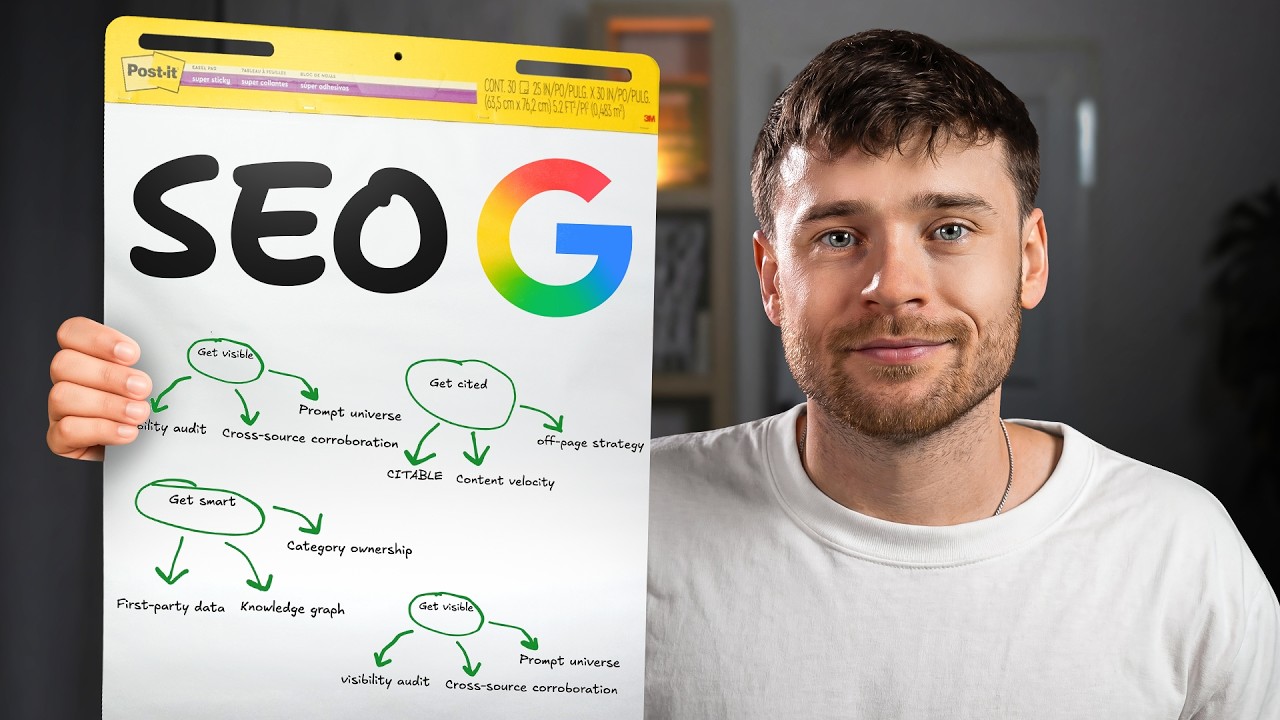
This allows the models to recommend you at the right time to users. you. So, think about how these your buyers are interacting with these models, right? They're not just typing keywords. They're asking questions. They're saying, "I'm using this tool. This is my budget. This is my uh, you know, unique situation." And so through your AI search strategy, you want to map to all of those entities that are being used uh in those prompts. And then finally, freshness and consistency, right? AI systems like fresh info. Okay? Again, thinking about it from the models perspective, these models, these companies, they want to provide a great user experience, right? Because if they don't, they get churn. They get people saying bad things on the internet. And so to provide a good user experience, they need to provide accurate, personalized, and fresh information, right? And so they're only going to pull information from sources that hit that criteria, right? So then you need to reverse engineer that and bake that into your strategy. So the AI search playbook. So first bucket we have is content. So answer optimization ensuring your content is easily crawable, rich with facts and original insights. Optimized to be directly used in AI answers and fresh.
We then have authority. So this is third party validation. Establish credibility across the web. So AI trusts your brand's information. And then uh third we have entity. So consistent identity and relationship. So maintaining a single source of truth about your company across the web and using structured data so models fully understand you. Okay. So let's jump into the first one. We're going to go all three of these, right? So number one, building content that AI models can easily crawl is optimized for answers and gives you an edge against AI slop. Right? So just an insight here. So imagine these models, these AI models acting like an automated procurement team, right? So they're a new type of gatekeeper that takes the user's prompts, searches the web with targeted queries based on the user's situation. So job roll, pain, budget, requirements, etc. They then short list content based on signals such as quality, relevance, freshness, and authority. And then they return a personalized answer with citations to user. Now, I'm going to break down this exact process maybe the next slide or in a few. But you know you need to understand how these models are behaving because if you can reverse engineer that then you can ensure that your content is is first of all being found and second of all being uh prioritized. So how teams most teams are approaching content right with the old search strategy. So keyword first and blog centric with lots of on-site posts targeting search volume content is long-winded filled with marketing fluff storytelling and introductions good for ranking in SER and I do think there is a place for this especially if you just want to focus on SEO now in the era of AI search this leads to ranking in Google but not being named in AI answers competitors with leaner answers shaped content get picked over you even if their overall content is lower quality and AI might ignore your content if it can't quickly extract facts, right? Especially if third party info contradicts or outshines it.
Okay, so just to talk through um how these AI agents behave, right? Because this is really one of the biggest differences between like traditional search and AI search optimization, right? So we have the user prompt on the left. Let me zoom into this. Right? So similar example that I shared before. How people interact with these AI models is very conversational. They give a lot of, you know, they tell these models their entire life story. Okay, so I'm an agency founder looking for a cold email tool and then they provide more context. I have less than 10 employees. This is my tech stack. And so this is what the user inputs to these models like chat GBT. Right from here, how these models conduct web searches. So the AI uh the agent rewrites this users prompt into targeted queries. Now the the the concept this is known known as is query fan out, right? So these agents do have web search capabilities, right? They're plugged into search engines like Google and Bing depending on the model. And so they're conducting web searches, but they are not conducting web searches like a human does, right? And so this is why ranking on page one doesn't matter because they're not searching how humans search, right? So the agent queries, they'll do several of these, maybe dozens in parallel and they might look something like this, right? So they're pulling information, entities, relationships from the users prompts and then they're conducting searches and they're using operators, booleans, and constraints to get targeted information.
Right? So the agent runs these queries on a web search. It then skims snippets of pages found. And so it doesn't matter if you're ranked on page one for cold email tool, right? The one of the keywords. It matters that you have content that is associated with all of these queries, right? There's an implication for traditional SEO here. Standard keyword-based content doesn't cut it, right? So, the agent skim snippets of pages found, it's not reading all of the pages. It's just looking for snippets. The next step is then when it has those snippets, it then shortlists um those snippets based on a few signals. Right? So, we've got quality. Is this good content or is it AI slop? Right? So, is it comprehensive? Is it citing original sources? Does it have original data? We then have authority both at the author level. Who is the person that has wrote this piece of content? For example, if it's a piece of content about cold email, well, is this just some, you know, random person? Does it even have an author or is it from a lead generation expert who has verifi verifiable uh cold email experience? That's at like the author level. And then we have the company level. Okay. Well, who is this company?
What are people saying about this company in all of these third party platforms that we talked about? Do they have a positive experience? In what situations do they use this company? Do they use it, you know, for uh are they an agency? Do they have low employees? Are they using close CRM, etc. Right? So the agent is shortlisting content based on all of those signals, right? So the implication here is that your content should hit these desired signals, right? So you want to uh match query fit for all of these entities and relationships. You want your content to be recent and fresh because that's what they prefer. And you want to have those authority signals. You want to consider that as well, right? So implication for a traditional SEO moving away from backlinks and listicles to third party citations and authority. From here once the agent has shortlisted snippets of content it then crawls uh promising content to extract facts and citations. So the implication here is we want to ensure content is answer first and easy to site right because the agent wants to provide accurate information back to the user and they want to provide citations so the user can investigate to see how this agent has arrived at this conclusion right so that the agent wants to provide accurate up-to-ate information and so your content needs to provide accurate up-to-ate information right you need to have verifiable facts right and so the implication for traditional SEO is we're moving away from like long story long stories lots of introductions stuff like that to succinct, verifiable and relevant facts and structured data. So these agents can crawl your content and they can verify um it's high quality. Then the agent provides the answer back to the user.
Right? So when you speak to these agents and you see them like thinking and uh conducting web searches, this is what in an oversimplified way is going on under the hood. Now there is uh another part of this where um they use existing training data. This is more related to real-time web searches, right? And so this is why it's very different to SEO because these agents are not conducting searches like a human would, right? SEO is built for humans um using search engines like Google and Bing. Moving on. Okay, so approaching content in the AI search era. Okay, so um first thing we want to do is want to map what we call your prompt universe. All right. So, think of your company's prompt universe as all the ways that buyers could discover you through AI models. Right? So, this is what we refer to internally as your prompt universe. List out all the questions and prompts a potential buyer might ask an AI where your product should ideally be recommended. So, think beyond keywords, right? Think about those situations, the the conversational nature um of these prompts. Okay? So problem statements, comparisons, you know, best tool for X, uh alternatives, you want to uh ensure that you cover the full landscape of queries. And you can pull these queries. You don't just have to guess. You can pull them from sales calls, how people talk about your product, uh understanding the trigger event that uh you know um motivated them to reach out, support conversations, community platforms, reviews, and deep research. Right? So just to visualize this, we've got explore, evaluate, decide. Right? Broadly talking about the buyers journey. So people who are at the explore stage, they might be asking things like how to scale cold email effectively, outreach tools for small teams, email deliverability basics, when they move to evaluate, they might be asking for alternatives to you, how do you compare versus another company, um, cold email tools that integrate with certain tools and then decide. They might be asking about pricing, you know, best under $100 with specific feature, uh, brand versus brand for agencies, right? So we want to map out this entire prompt universe. How we do this for clients is hundreds of prompts. We model this out uh using internal software to uncover okay where are you appearing in these conversations? Where are you being mentioned, cited? Where are your competitors being mentioned or cited?
And then that informs um the content. So you want to test this across AI models, your prompt universe. Uh so use an AI visibility product to test your prompt universe across models. Again, all of these models have their own considerations, right? So winning with chat GBT does not imply you'll win with other models. Consider conditions that could impact answers, right? Such as session memory. So if you go into your chat GPT instance today, the one that you've been using for months or years, it has all of this stored memory about you. It knows that you're an agency founder who lives in North America and you know you've been speaking it all this time. they store this memory and so when it provides answers to you it's going to consider that memory right whereas and so if you're using your own chatbt instance here the answers it gives you aren't going to be the same as it gives your potential customer who has a completely different memory set um to you right different personas so it's going to give different answers to people who say I'm an agency founder versus I'm a SAS founder versus I'm a ecom brand founder and geoloccation again the all of these factors impact the type of answers that agents give. Uh you want to log where you were mentioned, cited, the source of the citations and where competitors were but you were not and pay attention to differences. Right? One AI i.e. Toucht might know about you, another might not.
Right? Again, they have they all have their own considerations um and they are not all the same. Right? So here's an example of our internal software here where so we try to map out these prompts across the different stages of awareness. So we've got problem solution prompts here. So earlier in the buyers journey uh so we can see the model that we've uh tested this with uh the user prompt so they asked how to fight XYZ and then the model response so we can see how the model responded um and then basically we're just tracking were uh competitors cited were were you the brand cited or mentioned um and how do you how do you what's your score relative to your competitors right um thirdly plan content based on coverage So, from your tests, identify where you're absent or not cited. It's kind of the same thing. Uh, for each important prompt where you didn't show up or a competitor was cited instead, plan new content or uh, updates. So, prioritize content that answers those questions directly. Use the AI's cited sources as a guide. What info do they provide that you haven't?
This is this is similar to like SEO where if you search a keyword on Google and all of the top content being shown is uh a video on YouTube then you could that that could suggest that Google for that uh keyword prefers uh YouTube videos right so in this situation it would be unwise to create uh you know uh a listical or just a normal how-to article because they clearly prefer uh YouTube videos, right? So, it's similar as in these AI models. If there are commonalities in the content that's being cited, then try to reverse engineer that. If it's a listical, if it's on a certain platform, uh if it's within a certain context and you want to uh understand that and ensure your content uh follows similar patterns, right? So, just be a bit smart about it. Number four, ship answer ready content. So, create content pieces made for AI answers, right? So, examples, some comparisons, alternatives, uh detailed use case pages, integration pages, FAQs. Again, trying to map out all of those situations where users might be prompting. Provide plain language factual statements AI can quote. Use HTML, HTML tables for feature comparisons, bullet lists for pros and cons. Make it super easy for AI to grab a fact and cross-link to other content and pages to give richer context. Right?
So just like I've uh cherrypicked an example here is this blog I came across where they had this screenshot on the blog which is like an SEO behavior right oh let's make this look nice um but these AI models can't read this screenshot right and so if in this screenshot you have important context that would be relevant for a user just put it into a plain HTML table and I could argue that they shouldn't be using emojis here but just as a way of an example use HTML don't use fancy JavaScript script uh or animations etc. Right? These AI models are machines. They don't care how well they don't care, you know, about fancy animations. They don't care about these visuals. They just need to be able to access your information as easy as possible. Right? So again, trying to understand the differences between traditional search um and AI search. Moving on then. So make your contract uh content extractable. So write with AI consumption in mind. Lead with a concise summary. For example, a TLDDR key answers at the top. Uh I shared that previously. Use clear headings and simple language. Avoid marketing fluff.
Right? Every paragraph should have a factual nugget or insight. Right? So, we need to focus on brevity. Test. Ask yourself, could an AI snippet be taken from this easily? Right? If you're just giving long introductions, too much storytelling, you know, this ever changing landscape. These LMs don't care about this, right? They just want facts, figures, they want accurate information because again, they're trying to get that information back to the user. So, extractability. LM don't care about stories. They want succinct context and facts. What is the TLDDR of your content structure? Are you making life easy for LLMs to understand your content? Corroboration. Can your claims and facts be corroborated by other sources or are they biased? This is really important, right? If you're doing um like comparison, piece of content, alternatives, you need to be neutral, right? And and I know we all want to position ourselves best and the reality is you are going to be better for certain in certain situations for certain people. And so you need to be honest about that. You need to quite literally explicitly state if you are X, company A might be better for you, but if you are Y, company C will be better for you. Okay? So you need to like explicitly state the situations in which company A might be better than company B rather than just saying company A is uh you know we've all seen the comparison pages where the competitor is is framed as terrible and and the brand isn't authority is your content and company being referenced in high trust sources such as Wikipedia, Reddit, Quora, YouTube all we call these wled gardens internally right is the content written by a credible authority.
Can machines easily access your content or are you making it difficult? Right. So consider technical factors like serverside rendering, URLs, web vital, site maps, etc. I'll cover all of this in the um that checklist I mentioned which will be linked in the description. Some of this stuff is like uh this stuff is like brushing your teeth in the morning, right? Absolute Billy basics going to become um table stakes very very soon. But if you're not doing it, then you're just making life difficult, right? Everything else becomes harder. So this stuff is very basic but really really important. All right, moving on. Find an edge beyond generic. So if everyone is churning out similar AI slop, then you need to stand out, right? So do original research, surveys, data analysis, especially if you're say like a software company and you have access to a bunch of data. Use that data, put it into your content, right? That um ideally others will site. Publish unique insights or case studies with data. Aim to be the source that even third parties reference, right? This makes you unignorable to AIS. If other people are referencing your content, uh maybe you've published a report or something like, you know, at the beginning of the list I was referencing ah refs uh and HubSpot surveys and stuff like that, you want to create content that can get those citations because that signals to these models, hey, people are referencing back to this piece of content. It must be a good piece of content. It doesn't necessarily have to be back links. Um, and some of this stuff is just, you know, foundational principles of of good content marketing.
But this does matter because if everyone's just churning out daily AI swap, okay, how can you be different? If everyone's doing that, where is the edge? With each piece of good content, distribute it across multiple platforms and ideally influencers or users to increase surface area and citations, right? So if you're doing all this effort to create good uh content that involves first party data then you know half the battle is getting that in front of people which is distribution right so get it across all of these surface areas that these platforms are looking at right these w gardens social media etc because that's that's where the impact is okay that's how these AI models that's how your content gets on their radar right so take it from the horse's mouth this is Google just talking about like best content practices okay so this stuff matters this This is how they create their algorithms, right? Um it, you know, it's asking all these questions, looking for all these parameters. Moving on, keep your content fresh. Again, this is like lowhanging fruit and billy basics. Um that I think a lot of people ignore. Um so regularly update your content and refresh date stamps, AI models, uh and you know, people in general favor recent info.
Even just think about this from a human perspective. if they're faced with two pieces of content and one is five years old and one was created last month, you know, which one are they going to trust, right? Because things are changing so fast that, you know, six months is is out of date. So, when something in your product or pricing changes, update it everywhere. This is not just on your own website. Again, you need to consider your third party surface error. Um, and I think I'll share some examples of where that um wasn't done and and the impact it had. Freshness can be a tiebreaker for AI choosing between sources, right? So here's again another study by AHS. Basically the TLDDR. So they analyze 17 million citations. Um and uh the bottom line up front AI assistants prefer citing fresher content. So an average age of URLs cited by AI assistants. So I think they use what chatt copilot gemini perplexity Google AIO. Uh so the average age was 1,64 uh days compared to 1,400 days on the of SER right so AI agents or assistants preferred content that was 25% fresher right chat GBT specifically is more likely or most likely to site new pages okay so freshness does matter so summarizing uh this section take some water uh so content map out your prompt universe uh also known as what are users asking AI models. Use software to measure mention rate, citation rates, and share a voice. Ship answer ready content. Avoid AI slop. Opt for original content, subject matter expertise, and verifiable facts. Keep content fresh. So, delete underperforming outdated content. Merge similar content. Update all content.
Technical side, serverside rendering. This just ensures your content loads fast and it can be accessed by uh models. HTML content. No f fancy JavaScript or visualizations. Basically just think everything should be in uh plain HTML ideally. Core web vital tools. This is just really basic site architecture and links. So these models can access different parts of your website easily. Robots sitemap LM.txt. This is more of an unofficial thing. Um you know there's some people saying it's complete BS. Don't do it. The way I view it is if you do have an LLM.txt, it's not going to hurt your company. nothing bad's going to happen. Um, there's only upside. There's no downside to having it. Use schema to structure your website's data. So, FAQs, how-tos, reviews, articles, uh, and you can validate these by Google's rich results test. Right? Again, this is more so when these models come onto your page and crawl content. You want to sort of be signposting them to the right places to make their life easier. So, some Q&As's about content. How many prompts to get good coverage? The more the merrier. Uh, it's somewhat of a black box. uh basically these models are not exposing impression data. So these models are not saying chatyp is not saying hey 10 million people are searching for this thing right which is very um different to SEO right because you can use tools like seam hrefs where they know okay there's x amount of people searching for this keyword and so that's how you prioritize your content right well we want to go for high volume um low difficulty keywords ideally that's we don't have that um clear with AI search optimization. So this is why you know particularly internally we model this out um rather than operating completely blindly.
What types of content should be posted? So focus on content that aligns with bias questions, comparisons, alternatives, problem solution content, FAQ sections. Um you know with clear facts uh be neutral um and it basically maps to what these users are asking in these models. Does traditional SEO still matter? Yes, it still does matter. Google is not going away. Um, and you know, there is some overlap, a small overlap between Google success and AI success. And really, this just comes down to fundamentals, right? If you can rank on page one of Google, it probably means you're not a scammy, untrustworthy company, right? You probably have some domain authority. There's people backlinking to you, there's people talking about you. And so those good fundamentals do matter. Consider it uh as an expansion, not a replacement. You might adjust priorities. Um, but don't abandon SEO best practices. All right, especially if it's a key channel for you. All right, so moving on. Building third party authority so that AI models trust your information and company. Okay, so insight here. LLMs don't believe your company by default, right? So hence why thin content and baseless claims aren't going to be cited. These models short list content based on signals that determine whether your company is a credible source of information or not. Right? So even with great content that you've put a lot of time and effort into, your company will not be cited if your third party evidence surface area is weak. Right?
The consensus of the web beats your company's claims, right? Really important to internalize that. So the old approach uh to company authority. So traditional SEO authority equals back links and press releases. Uh companies might do link building or generic PR, but AI is looking deeper than this, right? Publishing claims only on your site isn't enough if external sources um don't echo or support those claims. Right? AI remains skeptical. Okay, they're saying they do this and that and they're better in these certain circumstances. Are other sources saying that? Can they back up these claims? Right? That's how these models are thinking. No structured profile. Many companies haven't created their third party profiles or added structured data. So leaving AIS to scrape inconsistent information. So why this matters? Third, low third party presence equals low AI mentions. If an AI can't find multiple independent mentions of you, it's less likely to recommend you. Each AI model has platform biases. Uh so one heavily uses Wikipedia and other Reddit. If you're absent on those platforms, you effectively don't exist to that model.
Incomplete or inconsistent info across sources leads to shallow or wrong AI answers about you. All right, so remember that most users will implicitly trust AI answers and not bother to investigate further. Right? So if that information about your company is light or wrong, they're just going to take it at face value. And even worse, like I said before, if your competitor is providing that information that the model sites, even if it's about you, well, you're just having no control of your company's destiny. Okay, so approaching authority in the AI search era. Okay, so first of all, you want to map that third party surface area. You want to get an idea. Uh so list out all significant external platforms where information about your product appears or should appear. Prioritize those favored by AI. Wikipedia, major review sites, Q&A forums, you know, w gardens, industry blogs, news outlets, etc. Identify gaps. Okay. What do you have? What don't you have? Are your profiles outdated? Is your information consistent across all of this third party surface here? Note this down, right? So, individual models have their preferences. So, chat GBT tends, this is um uh some some research. Credit Nick.
Uh so, Chat GBT biases towards Wikipedia. um Google AIO, Reddit, Perplexity, Reddit, right? So, understand all the different nuances of these platforms and where you need to be. Okay? Seed evidence on key platforms so we know where we are, where we're not. We've kind of, you know, um ensured consistency. Now, we need to actually execute on that third party surface area, right? So, proactively add credible information about your company across these platforms. This shouldn't be seen as fake sentiment, but making sure facts. making sure facts and use cases are represented. For example, create or improve your Wikipedia page of neutral cited facts. Encourage uh customers to review you on review platforms. Get featured in niche industry publications and ensure the messaging is consistent. This is really really important. Right? If there are certain if there are certain ways that your company wins against competitors, so your differentiators, put them absolutely everywhere, right? And the I don't know if I talk about this here, but you want to have this um this set of facts. I think I come on to this later, this set of facts that you just put everywhere, right? Because then these models where say, "Okay, well, they're saying that there and that there, and these people are saying that over there. I guess it's true. So that's what I'm going to um communicate back to the user, right? So think about semantic clarity, stage of awareness that has been targeted, uh honest opinions and reviews for specific situations, right?
So what I mean by specific situations, how people are prompting these models, hey um I'm a marketer at in this industry or this company. These are my goals this year. This is my budget. Right? So all of this situational context. Tier one platforms, Wikipedia, peer reviewed research. Uh tier two analyst news review sites. Tier three forums, YouTube uh communities, etc. And at Discovered Labs, we're helping companies with all of these. So just to show you an example um so we can see in perplexity here um I think the prom oh yeah best call email software and we can see one of the uh sources uh being cited is an owned source so this is their blog and then the other being cited is earned right so this is a ward garden Reddit so we can see if you expand this somebody has asked best cold email tools for small businesses and then somebody has commented saying basically given you know a good I say balanced uh perspective perspective. But as part of that perspective, they've recommended sales handy. They said they use sales handy for sending cold emails. And so notice there's a couple of things going on here. First of all, notice that this post has been deleted, right? So even though this post has been deleted, this comment is still being cited in these models, right? And there's a there's a there's a game to play there. And this is what we help uh clients at Discovered Labs do. Um uh maybe I'll come on to that later. But then also, there's no backlinks here, right? They're not linking back to sales handy which is the old game of SEO.
Somebody has asked best cold email tools. So the model's like okay people are talking about best cold email tools. Okay they're talking about it in the context of small businesses right this is semantic clarity. Okay they've explicitly mentioned sales handy. They said they use sent uh sales handy for sending cold emails. Okay. Well I guess there's a connection here. There's a relationship between sales handy being a best cold email tool perhaps for small businesses, right? And so this is all happening without a direct link back to sales handy. This is all just natural language happening, natural conversations happening in these wall gardens, right? This stuff really really matters when it comes to winning uh with AI search. Okay, moving on. So enabling others to tell your story. So ideally leverage customers and influencers to spread the word. So encourage your power users to write about their experience. Things like guest posts on your blog and explicitly saying this is from you know this user. Uh LinkedIn stories, case studies you can co-publish. Give partners or analysts sharable data or insights they can feature so your company is is cited as a source. Provide messaging kits to friendly customers and experts. example um for example key terms or description so that when they do talk about you publicly it's clear and it's AI readable and they're communicating facts that you want to be associated with the company right so you're not just saying hey it'd be great if you could do a LinkedIn post about us that's like level one level two is controlling the narrative hey we would like you to as part you know give them some creative freedom you know don't want to micromanage them but we would you know here are some talking tracks that we would like you to use we would like you to use these terms so those terms are appearing um in the web search that the agents are conducting, right?
And then why you want to do this because and not even from an AI search perspective but just general marketing people trust um what others say about you more than what you say about yourself, right? Uh so monitor and adjust. So continuously track uh what the web's consensus is about your brand. Set up alerts or periodic checks for new discussions or articles are mentioned in news. So watch how your AI visibility improves as you seed these signals. Okay? You want to know if these things are having an impact. Uh if certain third party info is uh misrepresented you or outdated uh you want to correct it. So people are using outdated information, old pricing um uh talking about old features um or just misrepresenting you just you know out outright you know uh misinformation then you want to ensure that information is corrected right? So you can update your blog, you know, correct your third party service error or reply with clarifications. Hey, actually, um, that's wrong. You know, we've since launched XYZ, um, you know, this is, you know, if you want to go for company A, in this situation, that makes more sense. But for us, you know, if you're in this situation, it makes more sense.
Or we have the flood the zone strategy, which is what we use for clients. if there's one piece of mis misinformation about out there about your company or we'll just publish 10 a 10 to one ratio of content that is uh um sort of correct in the record so treat this as an ongoing process as you make changes see how AI answers respond and refine accordingly right so you want to track your metrics is it are these activities that we're doing the content we're pushing out the you know the seeding uh content and mentions in these third party service area is this actually having an impact is it moving these metrics, right? You want to be very scientific about it. So Q&A is about this stage. Can you sponsor list calls to buy authority? Um, so you can and it will likely work, but it's usually a short-term hack. Look, um, you know, let's not let's not pretend that people don't gain the system. Okay, so many AI models recognize thin paid lists as low quality. This is the SEO game, right? People would create these listical websites just with the aim of um sponsoring brands and that would be their business model, right? these, you know, these things are ranked lower in priority than places like Reddit, YouTube, uh, Wikipedia, etc., right? So, you don't want them to be the main part of your strategy. A sponsored article might help a bit, but genuine mentions work better, right? And I'm not going to BS you here. Like, what does genuine mean? For example, um, where were we?
This comment, was this from a natural user or was it planted there? I'll leave that up to your imagination, right? um you know with the right tools, wisdom and budget there are ways to control the narrative. There are ways to appear like a genuine user and not actually be like that. Uh you know let's not pretend. So where are the most authoritative places to be? So tier one Wikipedia if applicable well- reggarded research on new sites with original data government educational references if any. If you can get in those, that's like uh you know top tier. Tier two, high quality industry blogs, recognized tops, top tools articles, YouTube reviews, community forums with active experts. Overall, Wikipedia is uniquely powerful. So consider it a priority to have a solid page if possible. And at Discovered Labs, we handle all of this, all of the content, all of the authority stuff, but um don't want to turn this into a pitch. So finally, entity, ensuring you have a consistent identity across the web. Okay, so AI models are the internet's new gatekeepers, right? And they don't consume information like humans. So these models need to be able to access and understand your information and they prefer consistent verifiable facts, right? So AI models need clear consistent understanding of who you are, what you offer and how you relate to other entities. What is the relationship? If the data about your company is scattered or conflicting, AI may uh may get confused or it will just go to another source where the information is all good. they have, you know, all their stuff in order.
So, the old way of approaching this, companies often rely on a basic about us page or scattered information on social profiles. Great for humans, but we're entering the AI era. Okay? We need to think about these gatekeepers that are um crawling the web. We need to optimize for them. inconsistencies, different descriptions of your product on different sites, outdated info on one profile versus another, little to no use of structured data on the website to formally define your company and product attributes. And so this leads to um AI models might basically misrepresent you or give generic answers. So wrong facts, outdated information or confusing you with similarly named companies. We've seen this as part of our modeling is we would ask about company A and they're like, "Oh, not really sure who company A is. Did you mean XYZ?" And because there are companies out there with similar names um the models are getting confused. AI models site third party sources with clearer information potentially allowing your competitors to control your narrative which is that's like worst case scenario and it does happen. Uh so consistent entity in the AI search era first step compile and synchronize your facts. Right? So a single source of truth for information related to pricing, packages, integrations, compliance, nap, uh name, address, phone number, I think it is, founders, etc. So again, this is like Billy basics, but it does matter. Uh Google business profiles, your crunch base, review platforms, directories, etc. Consistent set of facts across all of these. And this is an ongoing battle, right? Because hopefully your company is evolving. You're you're updating your product and services. Uh things are changing. Uh you know, new integrations.
There's always information is always changing. So you need to always be on top of that third party surface area. Make sure that everything's consistent. Use structured data on your site to embed these facts for AI models. Again, we're not optimizing for humans anymore. We're optimizing for machines. So uh second activity, create what we call relationship pages. So these are pages um on your website that explicitly link your product to uh related entities. So things like comparison pages for every single competitor, every single competitor where your product uh where you compare your product factually to competitors. So feature by feature updated as things change. Integration pages listing and describing every major integration or partner solution you connect with. Use case or industry pages mapping how your solution fits specific context so AI can tie you to those contexts. So write these in neutral uh informative tone like Wikipedia style and avoid marketing superlatives. This increases the chance AI will treat your content as a trustworthy reference rather than promotional fluff. So I can already hear you right. These secondary pages are not a new concept. You know product pages, integration pages, comparison pages. That's not the issue.
The issue is is that how people structure and create these pages is optimized for one SEO keyword stuffing. Number two is bias like just basically ripping your competitors apart and making your company look good, right? So you need to think about how these AI models look for information. You need to go into great detail. You know, okay, if you're if if this is your situation and you're this type of company, you know, we recommend going to the competitor. Here's the situations where we win, right? Neutral facts, don't try to lie, and they need to be rich with information. For example, when I was auditing a company the other day, they had integration pages, but there was probably like three sentences of information on each page. That's not enough. You need to explain how your your product works with that product in what situations is it used, you know, use cases because again, when users are prompting these AI models, that's all the context they're going to give. This is my company. uh we want a product that works like this and allows us to perform these actions. So you want to cover all of that uh on your comparison pages or your relationship pages, right? Because you're mapping to the way users prompt audit and correction. So double check key external listings for accuracy and consistency especially after big uh changes like rebrands, new pricing, etc.
Correct any factual errors or outdated information on third party sites. All right, this prevents AI from picking up and propagating mistakes. prime example here. Okay, so uh came across this company recently on their website in their H1 they say search over 1 million ad ideas but when I prompted them in Perplexity Plexity was saying browse over 500,000 ads right that's a big delta between 500,000 and 100 million and the reason why Perplexity was quoting 500,000 and not 100 million is because one on one of their third party profiles they mentioned 500k ads right so these models are looking for information across all of these third party surface areas. And if that information is inconsistent, if it's outdated, if it's just completely inaccurate, then you know, you're not going to be put um in the best light, right? Because what if that was uh an important criteria? What if the competitor had 10 million ads or 100 million ads? They like, well, you know, that comp that product has so much more data. I'm going to go with them, right?
And they would have never, again, they implicitly trust this information. So they would have never like me gone to investigate this and and discovered you know the discrepancy. So nail consistency and you'll gain accurate AI answers. So models will retrieve up-to-date correct details about your product. No more outdated references connected recommendations. They'll clearly recognize when your solution is relevant. Uh for example, it knows which use cases or industries you're a best fit and will slot you in appropriately in the answers unless brand leakage. we won't be accidentally left out or replaced by a competitor in AI suggestions due to confusing uh confusing or missing information. In short, you own your own narrative across AI answers. And so, if you think about there's a couple of behaviors that play here, right? There's like playing defense and there's playing offense, right? And if I was your competitor, how I would play offense is I would try to control your narrative. Okay? And so again, think about that like if um if your competitor is the one being mentioned and cited even when the user is asking about you, then you're just at a huge uh disadvantage. So Q&A about entities, best way to uh fix conflicting facts. So create a master sheet, update your website schema, sync all external profiles. Uh uh conflicts are a top negative factor. How often should we update profiles? quarterly for like a routine check but immediately if something major has happened you know you've updated your pricing features team freshness is weighted can we override bad LLM info so say if the like LLM is misrepresenting you can't delete it you know you can't just reach out to chat and say hey don't do that uh but you can outweigh it with a flood flood the zone tactics like I talked about earlier um getting information placed in high trust sources because then that will be prioritized over the existing information uh and you can uh time or uh you can time the training cycles as well. Should we mention competitors on our site? Yes. Uh explicit relationships teach AIs where you fit and when to recommend you, but use neutral factual term, right? So don't be scared like, "Oh, if we talk about this competitor, they're going to be annoyed and talk about us. So what? It's going to happen.
You might as well do it now." Okay. So summary of all of this, uh the invisible to recommended playbook um content. Create AI optimized content. Concise, factual, targeted to key questions so models have the ammo to recommend you. Number two, authority. build credibility beyond your site. Third party endorsements, consistent positive presence so AI's trust mentioning you. Again, you first of all got to have the content when they're conducting these uh queries. And then you've got to be the trusted source of information so they shortlist you. Entities maintain a single source of truth and clear relationships so AIs understand exactly who you are and when to include you. Right. First mover advantage. So this window of AI searches early days is a rare chance to outperform larger competitors. many of them haven't adapted yet. And honestly, there seems to be this like mentality of uh people with, you know, SEO teams like reluctant to adopt some of these strategies. And I think that's just going to be uh uh going to hurt them in the long run. So, by implementing these steps now, you can secure your stop uh your spot and AI recommendations before things get crowded. Now, if you've got to this uh part of the video, just stick with me for a few few more minutes. So, why you should work with Discovered Labs, right?
So, we provide an end-to-end service that helps B2B companies get discovered in AI search. We're AI first, so we optimize for citations and recommendations, not just rankings. We ship assets. We produce comparisons, alternatives, integration pages, AI's quote as well as daily articles. Third party authority machine, we build signals, AI's trust, so getting you into those w gardens and high trust sources of information. Now if you compare us against you know a software product you can buy these AI visibility products and uh do it yourself. You can work for a traditional SEO agency who will do it for you or you can work with us AI first company that understands the differences between a SEO and AI search optimization and do it for you. Software products going to give you automation. Traditional agency they're going to be using things like Zapia N. We're building enterprisegrade software and AI under the roof software product. You're responsible for handling the execution. Traditional SEO agency manual workflows. We build custom workflows for you. Software product, you still have to figure out the strategy. Traditional SEO agency will give you a junior person to manage the strategy because if they don't, you know, their margins are so low, they can't survive. We build the strategy for you by senior experts. S uh SAS product, you pay for usage.
Traditional SEO agency, you pay for people so they can hit their margins. With us, you pay for outcomes. Software products going to give you reporting and dashboards. Traditional SEO agencies going to handle content and backlinks. We at Discover Labs handle everything. Content, third party, original research, entities, page building, graphics, outreach. Use a software product, your time to value is going to be months because you still need to build a strategy and execute it. Traditional agency take four to six weeks of onboarding. Our time to value is 5 to seven days. From day fiveish, we're going to be shipping content. All right, cheers for watching.
Podcast

Podcast
Podcast
Podcast
Podcast
Podcast