Podcast
SEO Is Not AEO or GEO - Here's Why (Differences Explained)

Liam Dunne
Host
September 8, 202557:53
All right. So, how to stop only chasing SEO positions and start becoming the recommended solution in AI answers. So, AI search has changed how B2B buyers discover products. And so, therefore, yesterday's SEO strategy is not optimal if you want to be recommended in AI answers. So, what I intend to cover in this video is the clear differences between traditional search and SEO versus AI search. The three surface areas you need to own if you want a modern search strategy. So, traditional SEO search typically covered one surface error. There are now two new surface areas to consider. And finally, the four-step AEO playbook to earn citations. So, quick TLDDR on what's happening um with search really to to set the frame for the next 30 40 minutes. Um so, as I mentioned, how B2B buyers organically discover products and services is changing and this is all down to uh the emergence of AI search. So some numbers here, one in five Google searches included an AI summary in March 2025 which is enabling what we call zeroclick research. I'll talk in more detail about what zeroclick research, what that means and and some of the implications.
48% of B2B buyers use AI search while evaluating vendors. This is a HubSpot 2024 report. So this number is probably higher uh today. Um, and I think why it's important to flag this is because through conversations I've had with people, there seems to be this misconception that only uh consumers uh use AI assistants like chat dubity, which uh is false. There's a a 50% projected drop in traditional search by 2028 as users shift to AI assistance. So more people are going to be using Chat, Gupty, Claude, Perplexity, etc. rather than completing searches um in uh search engines like Google and Bing. And the reason is what uh the reason why is quite obvious is because rather than searching some keywords and getting a random uh list of blue links, you can actually get personalized answers based on your unique situation, problems, uh and desires uh which is just a far better user experience. And then probably best of all, visitors that come via AI search convert much higher. So an average three to four times higher conversions. AHFS did a recent study where they found AI referred traffic converted 23 times higher um than traditional traffic. And so I think just to go into the details and you can um read the report yourself. I think AI traffic accounted for 0.5% of their website traffic which is a very small number but accounted for 12% of their total number of signups which is just uh huge and so there's a lot of reports and studies out there uh that you can look at. So the implication here is if if you haven't considered this, you know, if you haven't been keeping an eye on this and if you haven't adapted your search strategy, then it's likely your company could be invisible to rapidly growing segment of the market.
And this is even if you've already been doing traditional SEO over the last several years. And so if this is your first time watching one of my videos on YouTube, just to give a bit of background, you know, who the hell is this guy, this stranger talking about AEO? Um, so I'm Liam. I'm the co-founder at Discovered Labs. We work with B2B SAS companies to help them get discovered uh in AI assistance and overviews. Um, I've worked with B2B SAS companies over the last 5 to six years and have some testimonials and case studies from those engagements which you could probably watch on my YouTube. So some notable ones helped instantly grow to 20 million AR in three years bootstrapped. Uh just a note on that. We stopped reporting their revenue maybe a few years ago and so they're much larger than that today. It eventually gets to a point where talking about your revenue doesn't help you. Uh we helped SEO space grow from 3K to 50K MR in 12 months. Helped FL at 1 million in 6 months. Uh and a few other stories there. At Discovered Labs, I'm joined by my co-founder Ben who's an engineer and ex Stamford AI researcher.
And so when it comes to organic search there there really is this sort of maths and science side of it you know how you structure the sentences testing reporting uh research etc. And then there's also that art side which is you know creating good content and that's also readable for humans. Uh and so that's where my demand generation experience comes into it. And so as I said you can watch those testimonials and case studies on our YouTube channel. But let's move on. Um, and obviously I do have a dog in this fight, right? We offer AI search optimization services, but this isn't just me, um, you know, shouting from my lawn about how important AI search optimization is. You know, if if you're in the B2B marketing space, go to market space. Everybody is talking about this at the moment. And here's a visual by Semrush essentially projecting that um visitors from AI assistants or LLMs including Google AI overviews is eventually going to uh outperform uh traditional organic search. And so we're still in the first innings right here. The playbook is still being developed and hence why I create this content because I truly believe if you can jump in now, it's going to be scrappy. You know, we're still figuring things out, but if you can just ride the momentum, you're going to be in a really good place. uh before everyone else figures it out.
And so let's uh bring this down into the sort of the the micro. So user behavior is shifting towards AI answers and assistance. And so if we look at here traditional search versus AI search. So in traditional search, users search a short query, you know, a few keywords, usually anywhere between sort of three to to seven keywords they they search. You're then presented with a list of blue links uh also known as the SER and then as a buyer or uh you know a consumer you then click around these links and conduct research really that is what we've known to be search uh for the last decade or or 20 years and SEO being the role of optimizing that with AI search over here on the right users are having conversations so already there's a there's a much longer tale here. There's a there's a lot of context, a lot of constraints. Um, the AI then go away goes away and does its thing. And we're going to get into the specifics about what it actually does there. Um, and so the AI goes away, conducted conducts web search. It then synthesizes uh all of the information it finds from various sources. uh it filters those sources based on various signals and then it returns with a personalized answer or summary um to the user which is a very very different experience a much better experience um for users you know here you can see very conversational nature of these LLMs I'm an agency founder you know these are my company size I'm looking for these solutions this is my tech stack these are the constraints I have you know pricing um budget etc and then the AI is going away and doing its thing and giving me a personalized recommendation.
This is a much better experience than just being presented with, you know, a list of random blue links where I then have to go do the work. And I'll get into the specifics about this uh in uh throughout the video. And so search is moving from these short queries to conversations and it's moving from these list of random blue links to personalized answers based on the user's context and situation. And so if you're not retrievable, if you're not citable, and if you're not trusted by these AI models, then it's likely that your narrative in these AI answers is being controlled by someone else at this critical moment of consideration because they these AI models have to get the information from somewhere, right? And if they're not getting it from you, then it's likely that they're getting it from a third party, uh possibly even your competitors who, you know, aren't incentivized to to position you in the best light. And the thing to consider about these AI answers is that they carry far more weight than just a list of random blue links on page one of Google because of that personalization uh element. Right? This is almost like asking your friend for a referral. Like, hey, I'm looking for a tool that does this or really struggling with this. I'm looking for an agency that does this. Do you know anyone? And your friend comes back and says, yeah, actually, I've heard good things about this company. Uh you should reach out to them. you put a lot more trust in that recommendation than just, you know, a random agency or software on LinkedIn. And we we're seeing similar effects in AI answers because you're given that upfront context about your unique situation.
There's that memory component. These models have a a build a knowledge graph about you. And so the answers they give you are are personalized to your situation, to your constraints, to your needs rather than a list of uh random blue links. And so, you know, the the big question that everyone's asking at the moment is, isn't this just SEO? Um, and we, you know, we we have a strong opinion on this. It's loosely held. Always willing to change our opinion, but we think a distinction is important here. Um, and, uh, I'll go, you know, that the core idea of this video is is to go into why. Um, and so the primary goal of AI search is to win selection. is to become the recommended choice in AI answers. Uh it's not just to rank on a random list of of blue links in the SER, right? So, look at some of the key differences. Traditional SEO, uh we're chasing clicks from a ranked link. In AI answers, we're chasing, you know, mentions and citations inside personalized answers. In traditional SEO, we're trying to rank entire pages. In AI answers, we're trying to um have short extractable passages. In traditional SEO, the winning asset is a 2,00 3,000word post.
In AI answers, it's a 40 to 80word answer block with structured information. In traditional SEO, we're chasing impressions, clicks, and search positions. In AI answers, some of the leading metrics are mention rate, citation rate, and share of voice. how often you're being mentioned, how often you're being cited, and the the frequency in which you appear relative to your competitors. Traditional SEO has has really had this reputation of being low intent. A lot offormational, you know, how-to articles that have low conversion rates, whereas in AI answers, it has high intent because the answers are personalized to that user's unique situation. So, you can kind of imagine it loosely as a sales rep, right? You know, these AI answers ideally are positioning your company against competitors. They're mapping your company to the to buyers problems. And so by the time somebody does click through to your website, they're really primed, you know, in comparison to just reading an information article. Now, one thing you'll never hear us say is that SEO is being replaced or SEO is being killed.
Um, we do not believe that. uh Google, Bing, the search engines are not going anywhere. Either is traditional search, you know, it's still the the 500 pound gorilla. Um and overlap does exist, right? Uh technical SEO is still table stakes because now we're optimizing for machines and agents and so all of that needs to be in order and we'll come into I'll get into more detail about that. Ultimately, we're still creating highquality content that is being indexed by search engines. We're still optimizing for positive brand associations, but the strategy, measurement, and outputs for um answer engine optimization, AEO, are different. And so that's why we think um uh distinction is is needed. Now, the biggest reason why we think distinction is needed is because you can have perfect SEO. You could be doing SEO for the last several years, 10 years, 20 years, and you could still not be outperforming your competitors in AI answers who maybe didn't have as much of an SEO strategy. And so I think before we compare some of the the tactical differences between traditional SEO and AO, well, first I think we need to actually define what SEO is from uh somewhat first principles, right? So a web page is a document which consists of text, images and code and that lives at a URL, right?
So web pages are your articles or you know secondary pages. We then have search engines that send crawlers to discover these pages, read them and store what they learn in a giant index. Your title tag, the headings and internal links in your content help understand how everything connects. Internal links to various other pages. This is how these crawlers map your your content and understand what it's about. And so then when a consumer or a buyer searches these search engines, they consult the index and they return an ordered list of results. Right? That's the SER that's that random 10 blue links, not random, but those 10 blue links that we're seeing when somebody searches on Google. And so those pages are ranked by how well they seem to answer the query known as relevance. How trustworthy they appear. uh so authority which is often in the context of SEO inferred by backlinks and how good the experience is on those web pages. So things like speed, mobile optimization etc. Right? That's really the game of traditional search that we've known over the last 10 to 20 years. And so search engine optimization is the craft of optimizing all of this, right? It's the craft of helping search engines find, understand, and trust your pages so that you show up higher on this list, right?
And so typically how that manifests is technical SEO, on page SEO, which is content, and off- page SEO, uh, which is backlinks. Okay? That has been the game of SEO over the last 10 to 20 years. Now, with the emergence of AI search, we're not dealing with that anymore. We're dealing with a completely different beast. We're dealing with generative uh, and intelligent systems. Okay? and how they uh find, synthesize, and prioritize information on the web is completely different to what we've known over the last 10, 20 years, right? And so if traditional SEO was built over how search engines or uh how users have found and searched information over the last 10 to 20 years, if SEO was built around that and now all of that is changing, then it's no longer no longer fit for purpose in the AI era. And so that's why we think there needs to be a distinction because SEO is focused on all of this stuff whereas AEO is focused on uh these generative systems and optimizing for that. Right? So let's go into some of the details about some of the differences between traditional and these generative systems. Right? So how generative information retrieval differs from classic information retrieval.
Right? So we're going to get a bit nerdy here over the the next um 10 minutes. All right. So we're going to refer to information retrieval as IR. Right? And information retrieval is that that that process of retrieving um information. So the first error, so we're going from single query and a ranked list of pages in the SER to one question and lots of mini searches, right? So classic search takes your query and returns a single ranked list of pages in the SER. Right? As we showed earlier, got the user query and then we've got the ranked list of pages in the SER. generative systems. They take that query or also known as your prompt and then what they do from there is they don't just use it verbatim to conduct web searches is they transform that user query into dozens of subqueries and this process is called query fan out right and these queries consist of you know filters operators and variations to make the searches very very targeted and so they're searching the web and then they're bringing back the best snippets so you know passages of text not entire pages from multiple places and then merging them together in one answer, right? And so, um, as part of this, I'm going to give some, you know, examples and analogies to to really hit this home. So, this is the difference between going into a library and asking a librarian, hey, I want to learn this topic. Could you recommend uh your top five books on this topic?
Right? Very similar to, you know, putting in a query and being presented with the top five or or 10 links, right? traditional search versus asking a team of research analysts saying hey I want to learn this topic but I want you to go out I want you to scan all these various sources whether it be books whether it be YouTube whether it be Wikipedia whether it be research papers I then want you to pull the relevant paragraphs or passages from all these various sources and then I want you to write me a summary of all the best information right very very different to traditional search and so the implication here is you don't want to just optimize for one keyword or page. You don't want to just optimize for getting for ranking position one for for a keyword. You want to make sure that many different phrasings and angles that are coming from this query fan out process can still pick up reliable quotable facts about you. Right? So to to kind of visualize this query fan out process in a simplified way. And so you can see this um this prompt at the top again. I'm persona. This is my budget.
This is my team size. These are all my constraints. This is my text stack. Very different nature to searching for keywords in Google. And so you can see how the model is reasoning here. And you can see highlighted in red some of the web searches that it's doing. Now, it doesn't expose the actual query to us here, but you can see that it's researching Facebook ads analytics solutions and pricing. So here it's probably going to use some uh you know booleans and constraints um you know very very highly targeted web searches. So, it doesn't matter if you're on page one here, right? It just matters if you have the right information. Verifying pricing details for certain vendors. Searching agency analytics pricing for unlimited users. Verifying pricing and integrations for analytics tools. And here you can see here it's reasoning with itself. It's saying um fit within the budget. Now, I need to check agency analytics and confirm their pricing. Right? So it's it's conducting all of this web search based on my constraints and it's reasoning with itself to ensure that it's getting the the right information because these models just care about creating a great user experience. Right? And how that manifests is factual relevant and recent information um that the user wants. All right. So that's the first difference between traditional information retrieval and generative information retrieval. You know how these agents are conducting these web searches.
The second reason is we're going from ranking whole pages to quoting specific passages. Okay, so in classic search uh decides which pages should rank whereas generative systems they decide which passages which are just small chunks of text are most useful that they can relay back to the user. Right? So if your page hides the key details in a wall of text or pros or in an image, you know nice graphics, then you're going to be ignored. Okay? because uh these agents are machines um you know they just want they're just looking at your website as raw HTML right and so they're looking for those facts they're looking for those passages and so if it's if that that uh those facts and and information is spread across you know 2,000 words and you're just making life difficult for them and they're not going to site you so the best way to think about this is thinking in the sense of information dense index cards and not novels right so if you're like studying for an exam or or a topic IC, you go out there, you do your research, watching videos, reading books, and then you take all of the key facts and the important information and you put them onto index cards that you study. Right? That's what we're optimizing for here is how can we take all the uh important information and facts and condense it into our into our content rather than spreading it across and with all this filler text that these agents uh don't care for. And so the implication here is we're optimizing for passages, not entire pages. And so this means how you structure your content must be considered. Right? If these agents are are quoting 40 to 80 word passages, well then what needs to be in those passages for it to be optimized um for them. And so that how that manifests is is your um content style and strategy.
And so we need to ensure claims can stand alone and are machine readable, for example, in HTML, not screenshots. And so here's an example here which I think um shows this quite well. is I asked for the top B2B analytics platforms for agencies running Facebook ads and then the second vendor it recommended here is it citated this uh sorry it cited this comment from Reddit right and so note here I I clicked through to this Reddit post I had to scroll 50% down the the page uh to find this comment that is cited and note how within this comment there are no links they're not linking out there's no backlink to to dash this which is the vendor. This is just natural language uh which you know appears to be an authentic message by a user. Whether it is or not, that's a whole different question. And it doesn't even have that many up votes, right? And so really this is the game that's happening here is these models are conducting this web search. Okay, this user is asking for this solution. Here are their constraints. They go out and conduct a web search and then they're finding, you know, just these small passages of information that they use um to then provide a personalized answer back to the user. Right? In SEO, we have not been optimizing uh for this.
Get out of this. Thirdly, we're going from fixed positions to personalized pick list. And this is a big one. This is really where I think uh smaller companies relative to incumbents uh really have an opportunity to win here. Um because SEO has always been about these incumbents that have just owned position one and position two and you would just never be able to compete with them whereas AI answers um you can. So in classic SEO, we're chasing stable page positions, you know, trying to get position one, position two, position three for certain keywords. Whereas in generative systems, they produce different answers for different people based on their context, prior questions, and constraints, right? There isn't a single spot to hold. You could be um so let's say you have two users. We have user A, user B. User A might um and user B, they might have a very similar prompt, but there's small tweaks. User A has a bigger budget. Maybe they have 2 million in revenue and user B only has 500K, but they're both looking for B2B analytics solutions, right? With generative systems with within AI search, the answer that both of those users get could be completely different because they have different constraints.
They have different situations. One might be an agency, one be might be a SAS founder. In SEO, this has never been considered. Both both of those users would get the same list of 10 blue links regardless of their budget, regardless of their situation or their industry or their constraints. With AI search, it's very very different, right? And so what that means is you can even if you're a smaller company with lower domain authority, you can become that recommended solution if you're optimizing for AI search because there is no single spot um to hold. This is all very uh fluid, right? So there's no longer this podium that any individual or company can just hold um forever, right? Which we've seen over the last like 10 20 years because these AI answers, they're tailored short lists and they're always changing. And so the implication here is stop obsessing over these, you know, these universal ranks and understand how you're appearing in these AI answers. So track whether you appear and how you're described across different personas and prompt chains because it's going to change. You might be rank one for agency founders but you know do terribly for for SAS founders just as way of an example. And so you want to measure your visibility, your citations and sentiment not just clicks, right? Because clicks as a metric are changing. And the best way to explain this is back to the librarian example is if I had a team of research analysts who went out there um and uh researched and and summarized all the key bits of information back to me on a topic, I no longer have the justification or the motivation to go open these books.
Right? So the books in this opening the book is a click here. Right? If if these agents are going out there um doing the research and then providing a personalized answer back to me, well then there's really less reason for me to click through to those websites because I now have the answer. The job has been done. Now, of course, if I want to go through and and convert, then I'm going to have to click through the website and and book a call or start a trial, all that kind of stuff. But the impact here is we're seeing that clicks are are being reduced. Now that clicks are still powerful, but there's there's something happening earlier in the buyers journey here, right? With traditional SEO, the first success metric we're looking at is page views. How many uh okay, so you know, you're ranked on the SER, but how many people are clicking through to your page? And really, that's where like the SEO funnel starts with AI search. You could be influencing decision- making and consideration, but you might not see the clicks in your attribution software. Now, that doesn't mean an impact isn't happening. You're still communicating your narrative. And so, that's why these leading metrics like understanding how you're appearing in these answers, how you're being framed, what u sources of information are being cited, what's the general sentiment. We need to understand those leading metrics to understand how you're influencing decision- making.
Right? So, you might not be getting any clicks, but um you know, brand recall is still happening. You're still being competitively positioned. And the huge thing about these AI assistants is this uh memory component, right? So here's a screenshot on chat GBT where I've blurred out a lot, but you know, it knows my age. It knows I'm interested in learning certain topics. And so they build this knowledge graph over time so that these answers only get more personalized over time, right? So the the these agents are doing their thing. They're conducting web search. Um they're filtering uh based on whether those sources of information are trusted. But in those last few steps of reasoning, I'm oversimplifying it here, is they're then asking, okay, well, is this answer personalized to Liam? Sure, it might be personalized to that person ABC, but based on this memory I have of Liam, is this answer personalized? And then they're switching the order. Maybe vendor vendor one is actually vendor two now because based on my unique situation, we have not seen this happen with traditional SEO. We're just being hit with a generic list of 10 blue links. Um, and so, you know, the implication here is it doesn't matter if you're position one on on the SER. It just matters if you have the right information for this user, right? And we can even see here on the right as part of that that reasoning flow, it's like it's it's it's saying to itself, you know, however, since the user specifically asked for a solution fo focused on Facebook ad strategy analytics, I'll need to consider other tools more tailored for that. Right? So, it looked at I think it looked at this vendor and maybe decided based on my prompt, it wasn't it wasn't good. And so it it disqualified it, right? We're not seeing that level um of intelligence in uh traditional search.
And then fourth, we're going from backlinks as the the primary mechanism as authority in traditional search to cross- source agreement or corroboration in in AI search, right? So classic SEO leaned heavily on backlinks to your site. really the the whole strategy of SEO agencies was to get you on do some PR, but really the the main bulk of the AT20 was getting you into sort of sponsored uh list of calls or you know maybe even um private networks and stuff like that if they wanted to be a bit gay hat whereas with generative systems they're looking for agreement across multiple trusted places so review platforms uh directories press docs communities even Wikipedia and so if when um you know deciding whether to to site your information or not. If multiple or several third parties say the same thing about your company, whether it be the pricing, the positioning, the differentiators, the product, but your site says something else, the model is going to trust the consensus, right? And so with traditional SEO, the game has really been about um you know, positioning your company, all our competitors are crap, our product is great. That's no longer going to cut it in AI search. really matters more what the consensus says about your company. So you need to consider that extended um third party surface error. And so imagine your website is your resume where you know you you you say all these good things about yourself and that was okay in the SEO strategy the SEO yeah with a a traditional SEO strategy in AEO what's happening is uh is um these models are essentially you know calling up your references to corroborate your claims.
Okay, just as a way of an example here to simplify it. So it it doesn't matter how great you're you you are on your own website. It matters what other people are saying about you as well. You want all of that to be consistent because otherwise it's going to cause you some problems. And so the implication here is you want to govern your facts across the web. You know make sure your pricing features, integrations, positioning match on uh review sites, even places like product hunt, partner marketplaces, docs and your site because if there's any inconsistency then it's going to cause you problem. And you know consistency is one thing but also sentiment. Are people saying good things? Are they saying bad things? Is your company trustworthy? You know this is going far beyond uh backlinks. And someam uh just an example here to to hit this home and you know this isn't the end of the end of the world but it's a good example of how that inconsistency can impact you. So this company here on their H1 on their homepage uh one of the value propositions is that you can search over 100 million uh ad ideas. Uh, so this product is essentially a swipe file for ads. But when I uh prompt asked about this company in Pexity, it told me that you could only browse 500,000 ads.
And the reason why because I, you know, did some research is because on their Product Hunt profile, it says browse 500k ads. And they so they've obviously forgotten to update this. I think this information is maybe a couple of years old. And so even though they're saying this on their own website, uh these AI models are choosing that, you know, they're they're going with the consensus of what other people are saying about this company, right? So you need to consider that extended surface area of how you're positioning your company in all these various places because the worst thing that can happen is, you know, you're being misrepresented in these AI answers because a lot of buyers, they're not going to go investigate. They're not going to be like me and go, "Oh, I wonder why that's happening. I'm going to go to their Product Hunt profile." Right? Buyers are not going to do that. they're just going to take the information at face value. And so, you know, this isn't necessarily the end of world, but imagine if this was related to pricing. You know, it was old pricing or maybe um features that have been released but aren't being represented in uh AI answers and that's going to affect your competitive position and ranking, right? That's kind of what happens if if this isn't looked after. And so, a search optimization strategy is no longer just getting a page to rank for one keyword. It's making sure your facts can be pulled uh across many many searches that query fan out process for different varying uh personas with different variant intent levels and also confirmed by multiple sources in any format. Right? So the the kind of surface error we now need to consider um has increased massively.
And so a winning search strategy in 2025 and beyond combines all of these surface areas and we view these as uh three primary surface areas. So the first one is being discoverable via web search by both humans and now agents. And so traditional SEO has um always just considered the human part. You know, how can we be on page one, position one, position two when humans search, you know, head terms or maybe even, you know, shortest um uh uh tail keywords in in the SER. Whereas now we have two new surface areas. So the second one is optimized for citations. So having rich, verifiable and consistent facts corroborated by others. And then thirdly, secured in the training data. So this is where we get your most important facts baked into the actual model itself. And so they already know about your company without doing the web search. Um so future versions of the models know your company, right? This is great defensibility. This is the longer uh long-term um game you want to play that we do for clients. Um so three new uh two new surface areas, right? We're moving away from just uh optimizing for humans searching keywords and being in the SER to now citations and being secured in the in the long-term um training data. Right? So I said this before, we don't think an AI search strategy replaces SEO. It's just a new work stream that sits under organic search and considers the the new surface areas, right? And if done well, uh an AI search strategy should still dominate the SER. And we've seen this some of the clients we work with, our main objective is getting them more AI referred customers and and and and trials or whatever the business model is. And we've seen in in many cases that even though we're optimizing for that, our content and our work still outperforms the the SEO agency or the SEO team's content. We're still getting more organic traffic. We're still uh ranking higher in the SER. we're still getting more impressions and clicks despite us optimizing for AI search um rather than traditional SEO, right? So, if done well, you should be tackling all of these surface areas. It's, you know, ultimately as a company, depending on who's watching this, you know, you don't want all these different line items, right? Ultimately, you just want more organic organic leads and customers. And so, ideally, somebody's going to be owning all of this.
But the issue is is that most SEO agencies and teams, they're still just continuing as normal without adapting the strategy and considering these uh different surface areas. And the reason they're doing this is because the content that they've created over the last few years or several years is being cited by AI models. And so they, you know, they just assume, well, SEO is the same as AO. You know, our content's being cited. I guess we're doing something right. And I personally believe, you know, I'm willing to change my opinion on this, but I personally believe this to be a dangerous fallacy which is going to cost uh companies growth, right? And so just to give an example here is you could be winning with Facebook ads. Maybe you're spending hundreds of thousands of dollars a month and your ads are absolutely crushing it, really profitable. You could take those Facebook ads and launch them on uh as as LinkedIn ads and I guarantee you're going to get impressions, you're going to get clicks, you're going to get conversions, but does that mean they'll that will be the most optimal strategy for LinkedIn? No, it won't. And I guarantee it won't work as well because I've done both of those. And LinkedIn requires a different strategy to Facebook. So just because you're getting clicks and impressions and conversions doesn't mean it's the most optimal strategy, right? Each channel has its own considerations. And so what operates successfully at scale, I'm talking at scale here, um on one channel won't automatically translate to a winning strategy on a different channel. So you really need to consider these uh new surface areas um if you haven't been already. And so the big question for people is how can you make sure AI assistants like Chat Gypsy, Gemini Claw, etc. consistently recommend your company to potential buyers, right? So, what content should you create and where so that AI models site you as a source? How do you adapt your current SEO content and tactics for AI's answer selection criteria? And how do you track progress and iterate across different AI platforms to stay ahead?
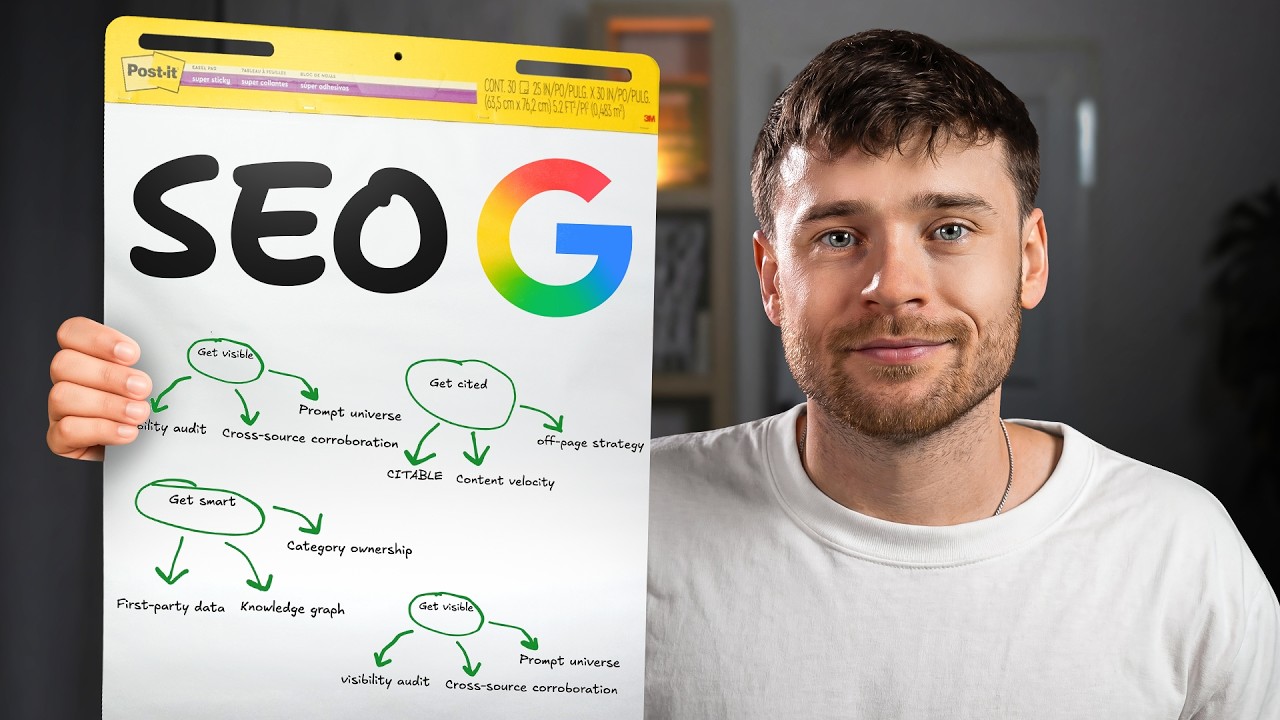
So, the four-step AEO playbook that we execute on behalf of clients um is one answer modeling. So, we see where you're named, how you're framed, and which sources models trust. Two, technical excellence. This is very unsexy. You know, everybody everybody of course just wants the the customers and the revenue, but because we're optimizing for machines and agents here, um having your your um technical foundations in order is just uh non-negotiable, right? Um because we're optimizing for agent retrieval and understanding. So, this is kind of the the old uh the normal technical SEO that we've been doing already, plus that third party consistency that always tends to fall through the gats. Content operations. So running a content engine that produces fresh problem focused citationworthy material consistently. So about discovered for our clients we ship on average between one to three content units daily uh to answer ICP's questions as well as we manage the endto-end process of original research using the client's first party data uh to gain an edge to actually just out compete their competitors on a content front but also to get into that training data and to get long-term defensibility. I'm going to explain that in more detail. And then uh finally, trust engineering. So digital PR still works. I wouldn't ever tell a client, you need to stop getting back links. You need to stop um you know PR of your company. However, with AI search specifically, and that's really what my content is focused on, the real edge is gained through seeing authentic discussions and mentions in high trust platforms. So, as we saw in that example earlier, that passage that was taken from Reddit, stuff like that really, really matters in AI search optimization. Now, uh I I do think people are overindexing on Reddit.
There's a lot of um I think a lot of people have launched, you know, uh Reddit agencies and Reddit software and so they're kind of trying to communicate to the market that Reddit is all that matters. I don't believe that to be true. there in terms of priority um uh these these AI models prioritize other platforms um first but before Reddit and so the core question we're asking ourselves when we work with B2B SAS companies is what must exist so agents can confidently site our client in the exact scenarios that their ICP is asking about and so breaking this down so answer modeling we're going from that keyword list keyword research in traditional SEO to now what we call the prompt universe so think of your company's prompt universe as all the ways buyers could discover you through AI models. So, we're listing out all the questions and prompts a potential buyer might ask an AI where your product should ideally be recommended. So, we're thinking beyond keywords here. We're thinking beyond head terms, thinking of that conver conversational nature that people are having um with uh these models. You can pull these from sales calls, support conversations, communities, reviews, and deep research to use the actual uh language that your customers use. Um how we do this for clients is we have internal software. So we do this across hund several hundred queries per client that varies across different intent levels. So people uh who are just searching for information versus you know comparing uh our clients against their competitors as well as persona types um as well because we want to we want we want to be the top of the list for everything for every query uh for every persona across all the different uh intent levels. And so I launched this graphic recently on LinkedIn just to help vis visualize this. So just like a simple way of looking at the different um funnel stages. So people exploring, right? So asking these sort of questions to evaluating to deciding, right? So you want to consider all of that. We do this across several hundred queries. There is software out there that will help you do this. So you can use these AI visibility products um that are going to help you test your prompt universe across multiple models. and you do want to do it across multiple models because you might be killing it in chat GBT for example but not doing so well in Gemini or Claude right all of these models they're different companies they're different platforms and so they all have their um different considerations uh under the hood um so you need to consider when you're doing this if you're doing it yourself you need to consider all the factors at play here such as session memory you know if you're just doing this in your own chat GBT instance which has all that builtup memory of you as an individual And let's say you're an agency founder and you're trying to understand how you're appearing uh for SAS founders. Well, you know, it's just an unfair experiment, right? Because the knowledge graph built on you as an agency founder isn't going to give a true representation of the answers delivered to a SAS founder. You want to log where you're mentioned, cited, the source of citations, and where competitors were, but you were not. And you want to pay attention to the differences. Right? Again, one AI model might put you at rank one. The information might have great depth. who might be really uh well positioned against competitors but then in another AI model it might not be the same right so again this is some internal software we have that does this on behalf of clients technical foundations and consistency then so again table stakes not sexy but really really important in an era where we're optimizing for machines to retrieve and understand and trust information so just some high level pointers here so you want to de develop what we call a set of facts so this is uh regularly updated source of truth across your product pricing category, your differentiators, what makes you unique, uh that you can propagate across that extended third party surface area to ensure that consistency. You want to improve your website schema, something that um you know, ideally you've been doing already, especially if you have an SEO strategy, but you know, it does uh tend to get put on the back burner because it's not sexy, but really really important like non-negotiable for agents to understand information. Again, I think website schema is one of those things where you know, you see content on LinkedIn and people are basically saying that this is all you need to do to to rank in LLMs. Don't believe that to be true. Absolute table stakes, but also non-negotiable. Um, you know, that an AI search strategy is so much more than just uh uh, you know, having website schema. You also want to recheck your crawability. So, bad crawl path, poor URL hygiene, and canonicals can impede agents. can just make their life difficult and so therefore they'll just site information elsewhere, right? And so this stuff does creep up on you. You know, we recently on boarded um a B2B SAS company who has a mature SEO strategy. They're getting uh a lot of traffic. Um however, when we conducted a technical audit, you know, we found hundreds of bad URLs, uh you know, 404s, uh just poor URL hygiene, uh cononicicals hadn't been managed, and so we're just making life, we're just impeding agents, um which is just going to cause you some harm. And of course I showed you the example of what happens when you don't have that consistent set of facts uh across the web content operations then. So this is obviously the main bulk of things. Um so what we're trying to do here is we're trying to produce high quality content that consists of short quotable units. So answers, specs, tables, comparisons designed for passage level retrieval, not just 200word uh essays of pros.
Right? So what we're doing here is we're aligning the topics that we post about with that prompt universe that answer modeling that we've done. Uh and personally internally we combine it with keyword research as a demand proxy because of course uh platforms like chat perplexity claude they don't yet expose impression data. They don't tell you hey 1 million people are searching for these prompts. um Google does that uh with traditional SEO because they have an advertising model and so they have to do that whereas uh the AI models don't and so they don't have to do that um and so we use keyword research as a demand proxy uh proxy it's not 100% accurate because of course this entire model has been built off short keywords whereas the conversational nature could be 10 15 20 30 words um we believe it's possible to have a high throughput uh um of content without shipping AI stop right this is one of the key ways we stand out is we ship, you know, multiple sometimes several pieces of content daily across every single client. And so if you compound that over time against competitors that are only shipping 10 15 articles a month, um, and it's high quality content, um, you know, you're just you're just out competing them. Um, and so one of our, uh, viewpoints here is that we believe this traditional SEO agency model is just ripe for disruption. I think in the AI search era, it's just you cannot get away with shipping 10 to 15 average articles per month and charging, you know, five, six, eight, $10,000 a month for it. Uh, as well, it's just absolutely right for disruption. And so, our 10-step process that we use here, it forces sourcebacked claims. really really important um for agents so that they can verify your information. Multimedia assets bringing in YouTube videos uh screen product screenshots uh other screenshots etc. a retrieval friendly structure so these models can actually interpret the information and real user commentary.
Also really important for backing up claims, right? If you're saying something about your competitor or your product, you need to be able to back that up. You can't just make these biased claims, right? We need that cooperation. And so our content workflow looks a little like this. So we bring in all these data points, you know, feedback. We generate content brief. We then go away and conduct research just as that team of research analysts would. You know what are your assumptions? What topic do you want to talk about? You need to go out there and learn that topic. We then analyze the SER and the intent of current piece of content. We do the first draft, first review. Draft two, we then fact check. This is really important. Draft three, we then have the final content. This is where we're asking ourselves like is this the most optimal piece of content for LMS? We have an internal rubric to score that. Uh is it in the the tone of voice of the author? Is it aligned with the company's brand guidelines? Basically, is this the best piece of content that we can publish? And then after then, so we're now at step nine on the 10th step, it's then human QA and editing. So nothing, we don't publish anything without it going past a human. Um, and if it wasn't obvious already, a lot of this is uh internal workflows using uh AI and automation. And I think one of the benefits of Ben and I being outsiders to SEO is we don't have this sort of this baggage, these limiting beliefs. I think there's this sort of sentiment that AI is the devil and you shouldn't use AI to create content. I would just challenge that and say that you just don't have the workflow. You just don't have the right workflow. Like yes, you shouldn't just be doing this in a chat GPT project. You can, but you're not going to create high high quality product um uh uh content. You know, we're not using N flows. We're not using Zapia. This is all custom, you know, commercial grade software that we're using internally. We're not using external tools. And just to scroll down here, it's high quality content, right?
So, here's um originality.ai, which is an AI checker. I don't think these are the gospel truth. Um you know, these are just a signal. Take it with a pinch of salt. But here's one of our recent pieces of content that scored a 99% likely original score. And we took uh the most recent article from an S SEO agency that's also working with this client and they scored 52% likely AI. Right? So, you know, from my experience, most SEO agencies and teams are using tools to write their content and those tools use use AI. And so, I think this notion of AI is bad for content generation is just uh false. It's just you need the right workflow. And I truly believe with the right workflow, you can not just match, but you can exceed human level um uh uh content. And really the proof is in the pudding, right? You know, this is one signal. Another signal is we've worked um alongside SEO agencies and our content has outperformed them on every conceivable metric both AI search mention rate citation rate share of voice and traditional SEO metrics like uh impressions clicks uh um rank positions etc right um and so we manage everything in inside notion doesn't have to be done that way but just to give you some visibility okay then trust engineering so as mentioned before you don't become citable you're not going to get cited by these these AI models by just being that company that's, you know, on their own lawn shouting how good they are. Really comes down to cooperation, that extended third party surface area. What are other people or publications saying about your company and not necessarily in the way that we've understood in SEO with, you know, listicles and backlinks, but natural language. Um so considering things like forums, even industry news newsletters that can get scraped and indexed, uh academic standard bodies, comparative tearowns and so broadly two things we're thinking about here. So seeding those authentic discussions um in those places where these models trust versus just that old way of sponsoring um listical articles. It's like I showed you the Reddit conversation earlier, but as part of what we do with clients is also doing those posts and seeding those comments uh and trying to control the narrative.
So like here's an example, a redacted example uh of of that happening. Um but then also thinking about original data. So these LLMs want novel information. They want novel facts again because they're optimizing for that um that good user experience. And part of that is providing relevant factual fresh information. So we manage uh that end to end. So we take we um we come up with the idea, we'll pitch the client, we'll analyze their first party data, we'll create the content, we'll package it, and then work with creators and influencers if relevant uh to distribute that as well. And so you're feeding these models fresh information that's going to get you into the the training data long term. But you're also, if it's good content, and it should be, you're attracting those signals back to you. um through you know mentions, co-mentions, uh backlinks, etc. um so really we're trying to play three games here you know agent retrieval citable content and training data and when I talked about earlier that answer modeling we do uh a critical part of that is we scrape all of the answers and that understands that helps us understand what sources of information are being cited. So we've got company owned sources. So these are uh sources of information maybe pieces of content that you own and are being cited. And so the activities here are how can we squeeze that for more juice?
How can we improve that content? How can we make it uh how can we um allow agents to to find pieces of information better? Could we restructure the sentences, the headings? Um is the website schema in a good place? Are the technical foundations in place? That's the sort of activities we're focusing on there. company earned. So, sort of third-party sources of of earned mentions. Uh, a massive thing here is ensuring that the information is up to date. We're still being competitively positioned. Uh, especially if these sources of information are over one year old, which is very common in B2B SAS, new features are are being shipped every week. Pricing for some companies is changing, you know, two, three times a year. And so just going back and ensuring all of that information is um up to date and also we have that consistency you know our differentiators are being communicated pricing etc. Why are you different to competitors? So going back we manage that identifying them reaching out to them and and and managing the whole process. We then have competitor earned sources. So perhaps places where competitors are being mentioned but you are not. So the the object objective there is to get co-mentions or to displace competitors and then competitor own sources. Uh that's looking at okay well why is that happening reverse engineering um what's the intent behind their content? What's the format? What's the type? Um can we recreate that and outperform them? Uh and also who is citing or linking back to their content?
Um can we displace them there as well? So the best thing about this of AI search as I showed that uh chart at the very very beginning we're really still in like the first innings of AI search and this is what gets us excited right you know it's early days this is definitely not a fad all you need to do is look at the AI platforms like open open AI anthropic I think open AAI's latest valuation is somewhere around 500 billion these are huge companies and then we also have the incumbents the the trillion dollar companies that also trying to win here everyone is trying to win and I think a lot of companies see this as a matter of survival And so for us mere consumer mortals, that means a lot of this is being subsidized for us because a lot of these companies aren't right now optimizing for profit. And I truly believe, you know, if you can just um w ride the wave, if you can just get in a boat, let the tide take you, I think you're going to end up in a in a in a a good destination. Um and most companies have still not fully adjusted to this yet, right? They're still just going on as normal with their normal SEO strategy.
And so I think there's this opportunity to secure first mover advantage. There's that, but also just the different considerations of how AI search works. Fixed positions are no longer a thing, right? So you've got those 500 pound gorillas that have just dominated position one, position two for the last decade, right? They're really being disrupted here. Um and so there's this disproportionate upside um for for companies that are are willing to take a bet on this. And so finally here um so how we typically work with clients just a generic uh road map for for the first 90 days the the top level thing here to understand is that by day five we're shipping high quality content. So we don't believe in this you know taking four to six weeks to do research and onboard clients. Um you know we've built the back end in a way that allows us to ship high quality content on day five. Now might not be uh perfect. It might need some tweaks. Maybe the um the tone of voice needs to be changed or whatever. That's completely natural. But we're definitely not going to be dragging you along for a four to six week uh on door uh on boarding period.
So days 1 to five at a high level full AI visibility audit and then doing all the technical stuff uh ensuring that on page schema is good making sure your EAT is is in place which does matter for authority signals. Some of this stuff is just classic SEO stuff, but that people have just kind of um forgotten about uh over time. So, making sure that's all in a good place. Schema, site maps, crawlability, URL hygiene, all that good stuff. Um third party profile uh ensuring entity consistency across them. Really low hanging fruit. We keep uh create what we call company artifacts from research. So, this is in the context of AI, how we manage context engineering. So, you know, uh who are your target personas? What do they care about? What are their problems? And how can we map content to those problems? How do we map you as the solution to those problems? How do we write in your tone of voice? How do we um do that for all the different authors that you might have? How do we align with your brand guidelines? All of that stuff we're doing in the first five days and nothing gets um nothing gets shipped without your approval. And then within those first five days also planning the the content road map from day five to sort of 60ish uh daily content uh well researched high quality well structured LLM optimized. Um uh another sort of work stream we do is uh what we call basically secondary pages like comparison pages, integration pages, use cases, glossery. Uh the scope of this really depends on your current situation but these are we view these as separate to uh say just um articles. uh these are really important for mapping those relationships because if we go back to how people are behaving with these models they're having conversations they're putting a lot of um constraints and upfront context i.e. I'm using this text stack and these are my constraints and so um when these models are going out searching for information we want to be there to meet them and provide that information to control the narrative um seed and community mentions as I mentioned earlier and managing all the outreach end to end to third party websites um for citation opportunities if we need to create the content for those citations we'll do that as well as well as the ongoing measurement uh and refresh cadence of historical content because freshness is a big signal from sort of day 60 and beyond then what we try to do at least once per quarter is uh original research. So as I mentioned, we manage this all end to end. We'll pitch the idea to you. Um uh we'll analyze your data. We'll turn that into good content. We'll reach out to creators and influencers um for co- distribution. Um we'll also um we manage thought leadership activation as well because this is important for authority signals. You know these models are thinking in simple terms, you know, who is this author, who is this company, why should we trust their information? And so thought leadership is is still very much important. And so we view ourselves as outsource organic. So, we can either work in a separate work stream separate to SEO and um with the core objective of getting you AI referred customers or we can own SEO and AEO just under the umbrella of organic. Again, really depends on your current situation and what you're trying to optimize for. And so, within 90 days, you're going to see higher citation rates in AI answers, broader prompt coverage, and rising share of voice and AI referred customers. um uh truthfully with the clients we're working with within at the moment within 72 hours um we're getting uh citations in AI answers and so again something different to like SEO is the we found the the sort of cycle to be much faster in AI search um okay and that's it so um if you watched this far I appreciate your time uh and spending it with me if you're a B2B SAS company and you want an AI search visibility audit for for completely free just go to the website, book a call and you'll probably speak with me.
Podcast
Podcast
Podcast
Podcast
Podcast
Podcast